Probiotic Sodas: Do They Really Help Your Gut? A Dietitian Reviews 5
Walk down the beverage aisle at almost any grocery store and you will see them everywhere. Colorful cans promising a "healthy gut" in every sip. Probiotic sodas have exploded, and if you live with acid reflux, GERD, or LPR, you are probably wondering the same thing I hear from clients every week: are these actually helping, or am I paying $4 a can for clever marketing?
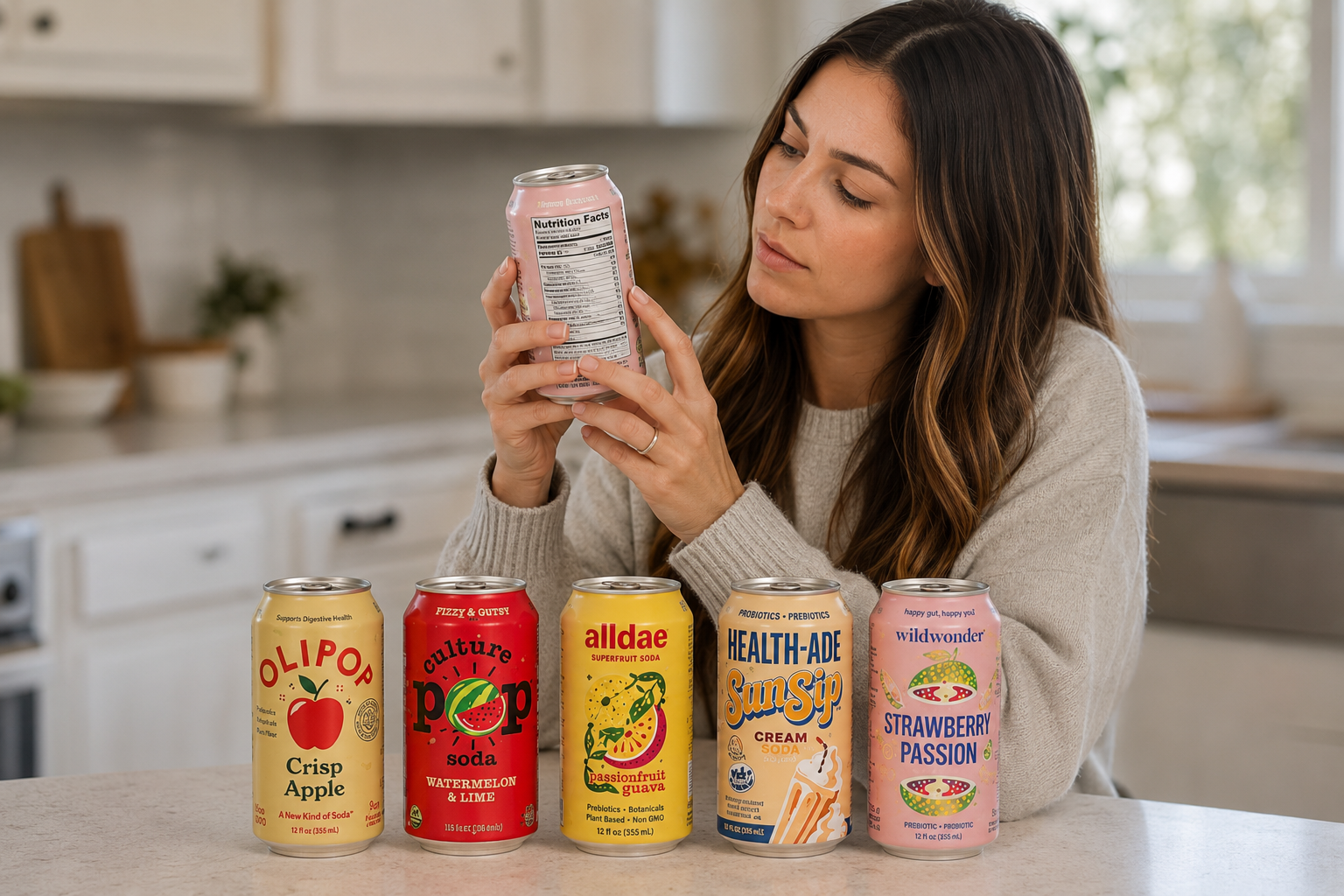
I picked up the 5 most popular probiotic and "gut-healthy" sodas at Whole Foods and put them through a reflux dietitian's lens. Here is what I found
Do Probiotic Sodas Actually Help Your Gut?
Short answer: some can offer modest gut support, but the "gut-healthy" label on the front tells you almost nothing. What actually matters is the specific probiotic strain, the fiber source, and how your individual stomach responds, especially if it is sensitive.
"Gut-healthy" is not a regulated term. A brand can print it on a can no matter what is actually inside. The information that matters lives on the back of the can, in the ingredient list, not on the marketing you see first.
The Problem With The "Billions Of CFUs" Claim
That big number on the front ("50 billion live cultures!") feels reassuring, but the raw count is only part of the picture. The specific strain matters more than the sheer quantity. Different strains do different things in the body, and a huge dose of a strain that does not survive the trip to your gut is not doing much for you.
There is a second wrinkle for sensitive stomachs. Many of these sodas lean on prebiotic fibers like inulin and chicory root to feed gut bacteria. Prebiotics can be genuinely useful. They also ferment quickly in the gut, which can trigger gas and bloating in people who are sensitive. That is a lot of people managing reflux.
What To Check On The Label Instead
Before the CFU count wins you over, turn the can around and look for three things:
The fiber source. Inulin and chicory root can be gas-forming for sensitive guts.
Acidic add-ins. Citric acid or apple cider vinegar may aggravate reflux or LPR symptoms.
The strain name. A named, researched strain tells you more than a big CFU number ever will.
Carbonation, Your LES, And A Sensitive Stomach
Here is the mechanism most brands will never mention. Carbonation adds gas volume to your stomach, which increases gastric distension. That distension puts upward pressure on your lower esophageal sphincter, the LES, which is the muscular barrier that keeps stomach contents where they belong. When that barrier is challenged, refluxate has an easier path upward. That is why so many people feel a flare after a fizzy drink.
The research backs this up. In a high-resolution manometry study, Shukla and colleagues (2012, Indian Journal of Gastroenterology, n=18 healthy volunteers, PMID: 22791463) measured what happened after people drank a carbonated cola versus plain water. The carbonated drink significantly lowered LES pressure and increased the frequency of transient LES relaxations, the exact openings that let reflux happen, while plain water did not.
This does not put fizzy drinks off the table forever. It means you get to understand what is happening so you can make a strategic choice that fits your healing phase, instead of reacting with fear or blanket restriction.
The Bubble Trick I Teach My Clients
If carbonation is the issue, there is a simple practice I walk clients through so they can still enjoy a fizzy drink with far less discomfort. It is a small way to let excess gas escape before it ever reaches your stomach. Small hinges swing big doors. I demonstrate exactly how in the video above.
So Which Sodas Are Actually Worth It?
The honest ranking: a couple of these genuinely offer gentle gut support, a few are mostly marketing, and some contain ingredients that could leave a sensitive stomach bloated and uncomfortable. This is not about labeling drinks "good" or "bad." It is about matching the choice to your body and your healing phase. Watch the full review to see where each one landed and why.
The Bottom Line
Probiotic sodas can be a fun addition for some people, but they are not a shortcut to gut health, and for reflux-sensitive stomachs, they deserve a closer read. The label on the front is marketing. The mechanism is what matters, and once you understand it, you get your agency back.
If you want help figuring out which drinks and foods actually work for your body, that is exactly what we do together inside the FLORA App. Track your symptoms, spot your real root contributors, and build a strategy around what your body is telling you. Start your 7-day risk-free trial here:
Related reading:
With love,
Molly Pelletier, MS, RD