Apple Cider Vinegar and Betaine HCl for Acid Reflux: What the Research Shows
Short answer: There is no good evidence that apple cider vinegar (ACV) or betaine HCl treats acid reflux. For most people, reflux happens because the barrier between the stomach and esophagus opens when it shouldn't, and adding more acid does nothing to close it. On tissue that is already irritated, an acidic shot or capsule can make the burn worse.
If you have been taking a shot of apple cider vinegar before meals and your reflux hasn't budged, you haven't been doing it wrong. The advice is built on the idea that reflux comes from too little stomach acid, and for most people that idea doesn't fit how reflux happens.
Does Low Stomach Acid Cause Acid Reflux?
For most people with reflux, symptoms track with where the acid goes more than with how much the stomach makes. Reflux happens when stomach contents move up past the lower esophageal sphincter (LES), the ring of muscle at the bottom of your esophagus that is supposed to stay closed after you eat. The crural diaphragm, the part of your breathing muscle that wraps around the LES, helps squeeze that opening shut.
A study using impedance-pH monitoring, which counts every reflux episode whether it's acidic or not, shows this clearly. Twelve people with heartburn were tested before and after a week of twice-daily omeprazole, a PPI. The PPI made the reflux far less acidic, from 45% of episodes down to 3%. The number of reflux episodes didn't go down at all: 217 before, 261 after (Vela et al., 2001).
That study is about PPIs, and it points to the same lesson for ACV and betaine HCl. Changing how much acid is in the stomach, in either direction, doesn't change how often the barrier opens. It's also why so many people come into my practice taking a PPI and an acid supplement like betaine HCl or ACV at the same time, one to lower acid and one to raise it, and their reflux keeps going.
What Stomach Acid Does For You
Stomach acid has real jobs. It starts protein digestion and helps you absorb nutrients like vitamin B12 and iron. It also kills a lot of the bacteria you swallow with food. That protective role is one reason long-term acid suppression is linked to a higher risk of some gut infections, including C. difficile (Kwok et al., 2012).
The goal is to keep acid in the stomach, where it belongs. That comes down to two things:
The reflux barrier: the LES and the crural diaphragm working together to stay closed after meals.
Motility: how efficiently your stomach empties and how quickly your esophagus clears anything that does come up.
What the Research Says About ACV and Betaine HCl
Apple cider vinegar. A 2025 review in the Journal of Clinical Gastroenterology graded the evidence behind reflux products sold on Amazon. Apple cider vinegar landed in the "insufficient evidence" group, alongside most reflux teas and supplements (Wong et al., 2025). There are no controlled trials showing that ACV on its own reduces reflux.
Betaine HCl. Betaine HCl does make the stomach more acidic, for a short time. In a small UCSF study of six healthy volunteers whose acid had been lowered with a PPI, a 1,500 mg dose dropped stomach pH sharply within minutes, and the effect wore off in a little over an hour (Yago et al., 2013). That study was looking at drug absorption. It didn't measure reflux, and it didn't include anyone with reflux.
The idea behind both is simple: if reflux comes from low acid, add acid. What neither one addresses is the barrier. And when your esophagus or throat is already irritated from reflux, an acidic liquid or capsule can add to that irritation. If it burns on the way down, take that as a sign to stop, and bring it up with your care team.
Who Might Actually Have Low Stomach Acid?
Low stomach acid (hypochlorhydria) is real, and it deserves a real workup. It's more common with atrophic gastritis, long-standing H. pylori infection, long-term PPI use, and older age. Those are diagnosed with testing, such as an endoscopy with biopsies, H. pylori testing, or blood markers your doctor can order, not with a home vinegar or baking soda test.
If you suspect low acid, ask your GI about testing before you start an acid supplement. Treating a guess can delay finding what is actually driving your symptoms.
What to do Instead
Instead of adding acid, we focus on the root contributors that move symptoms: the barrier, motility, and the tissue that has been taking the brunt of your reflux. Here is what I teach my clients:
The LES Lock: 1 to 5 minutes of diaphragmatic breathing right after meals, up to 5 times a day. As you breathe in, let your rib cage expand 360 degrees, into the front, the sides, and the back. In a randomized controlled trial at Mayo Clinic, breathing this way after a meal raised LES pressure and cut post-meal reflux events from an average of 2.6 to 0.36 (Halland et al., 2021).
The 3-Hour Buffer: finish eating 3 hours before you lie down for bed. Water and gentle drinks are fine. In a study from Osaka City University, people who went to bed less than 3 hours after dinner had about seven times the odds of GERD compared with people who waited 4 hours or more (Fujiwara et al., 2005).
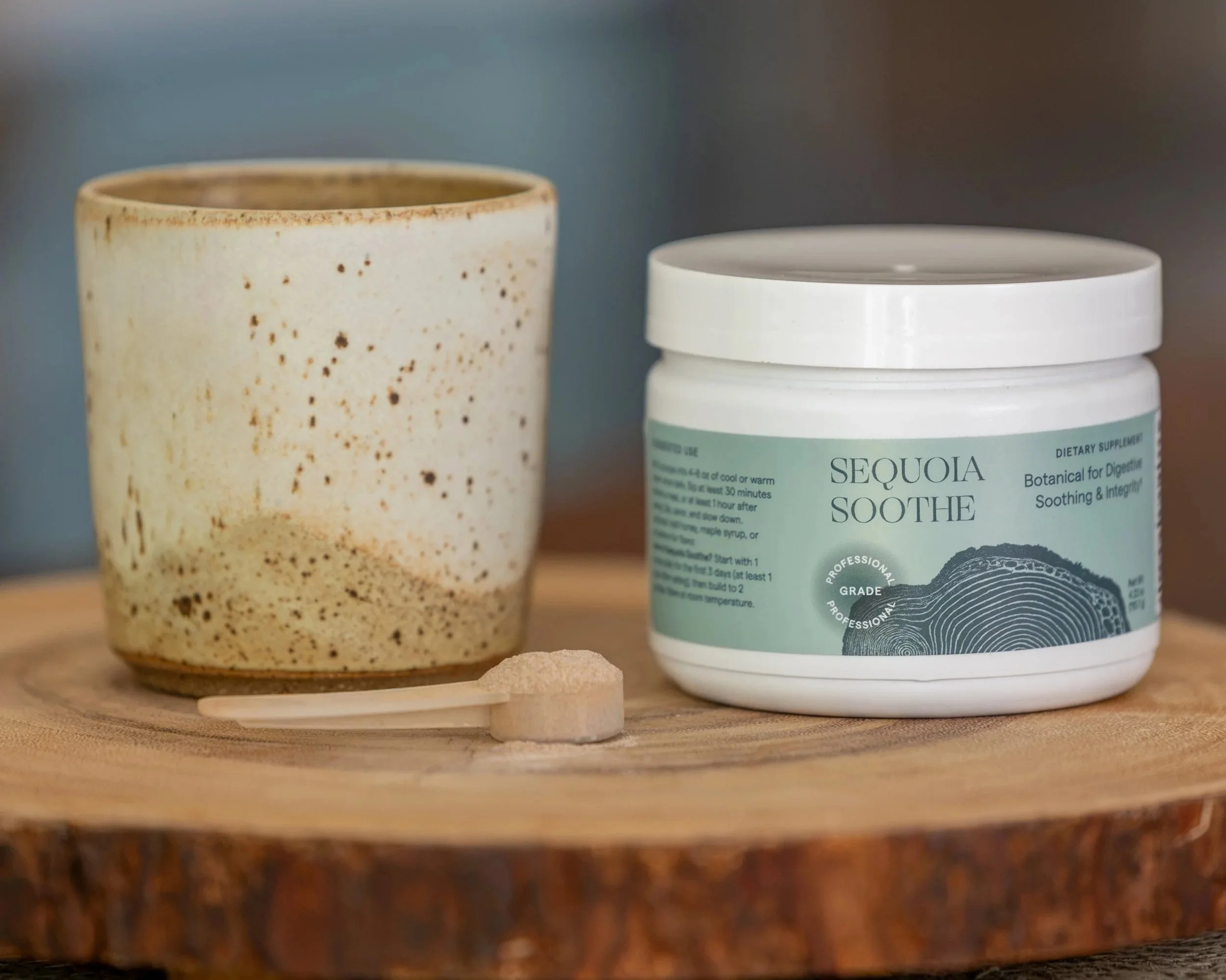
Soothe irritated tissue: mucilaginous herbs like slippery elm coat and soothe the throat and esophagus on the way down. Slippery elm was part of my own healing when I had reflux, and it's one of the ingredients I later built into Sequoia Soothe.
All three are additions to your day, so there is nothing new to cut out, and they work on the barrier and the tissue directly.
Build a Plan Around Your Own Mechanism
Reflux looks different from person to person. For one person the main driver is the barrier, for another it's slow stomach emptying, a hiatal hernia, H. pylori, or a nervous system stuck in stress mode. That's why a single viral fix rarely works for everyone.
If you want a plan built around what is driving your reflux, the FLORA App and our 1:1 work with our expert team of reflux Dietitians map it out step by step.
With love,
Molly Pelletier, MS, RD
References
Vela MF, Camacho-Lobato L, Srinivasan R, Tutuian R, Katz PO, Castell DO. Simultaneous intraesophageal impedance and pH measurement of acid and nonacid gastroesophageal reflux: effect of omeprazole. Gastroenterology, 2001. Impedance-pH study, n=12 heartburn patients, before and after 7 days of omeprazole twice daily; 217 vs 261 reflux episodes; acid episodes 45% to 3%. PMID: 11375942. DOI
Kwok CS, Arthur AK, Anibueze CI, Singh S, Cavallazzi R, Loke YK. Risk of Clostridium difficile infection with acid suppressing drugs and antibiotics: meta-analysis. American Journal of Gastroenterology, 2012. Systematic review and meta-analysis of 42 observational studies, about 313,000 participants. PMID: 22525304. DOI
Wong R, Navarro-Rodriguez T, Fass R. Gastroesophageal reflux disease and Amazon.com. Journal of Clinical Gastroenterology, 2025. Review grading the evidence for GERD products using the AHRQ Evidence-based Practice Center framework; apple cider vinegar rated insufficient evidence. PMID: 40622264. DOI
Yago MR, Frymoyer AR, Smelick GS, et al. Gastric reacidification with betaine HCl in healthy volunteers with rabeprazole-induced hypochlorhydria. Molecular Pharmaceutics, 2013. UCSF pilot study, n=6 healthy volunteers; 1,500 mg betaine HCl lowered gastric pH from 5.2 to 0.6, with pH below 3 lasting about 73 minutes. PMID: 23980906. DOI
Halland M, Bharucha AE, Crowell MD, Ravi K, Katzka DA. Effects of diaphragmatic breathing on the pathophysiology and treatment of upright gastroesophageal reflux: a randomized controlled trial. American Journal of Gastroenterology, 2021. Mayo Clinic. Randomized controlled trial, n=33 (23 patients, 10 controls); post-meal reflux events 2.60 to 0.36. PMID: 33009052. DOI
Fujiwara Y, Machida A, Watanabe Y, et al. Association between dinner-to-bed time and gastro-esophageal reflux disease. American Journal of Gastroenterology, 2005. Osaka City University. Matched case-control study, n=147 GERD patients and 294 controls; dinner-to-bed time under 3 hours, OR 7.45 vs 4 hours or more. PMID: 16393212. DOI
This post is for educational purposes only and is not a substitute for personalized medical advice. Always consult your healthcare team before making changes to your routine.