Gerd-Friendly Desserts Sweet Treats That Won't Trigger Your Reflux
Can I tell you something I hear almost every week from someone new in my practice?
“I haven’t had dessert in months.”
Not because they don’t want it. Because they’re afraid. They’ve been told to avoid sugar, avoid fat, avoid chocolate, avoid citrus, avoid mint — and by the time they cross everything off the list, there’s nothing sweet left that feels safe.
I get it. I really do. And I want to reframe this for you — because dessert isn’t the enemy of your reflux healing. The wrong ingredients in the wrong amounts at the wrong time can trigger symptoms. But there’s a wide, delicious world of sweet options that work with your body, not against it.
This isn’t about “guilt-free” treats or “cheating” on your protocol. (You’ll never hear me use that language.) This is about understanding the mechanisms that make certain desserts problematic — and using that knowledge to build sweet options that actually support your healing phase.

Why Some Desserts Trigger Reflux (The Mechanism)
Before I give you alternatives, you deserve to understand why certain desserts are a problem. It’s not because sugar is “bad” or because your body can’t handle anything sweet. There are specific physiological mechanisms at play.
1. High Fat Content and LES Relaxation
Fat — especially in large amounts — triggers the release of cholecystokinin (CCK) in your small intestine. CCK serves an important digestive purpose, but one of its downstream effects is promoting transient relaxations of the lower esophageal sphincter (LES). When your LES relaxes inappropriately, gastric contents can travel upward.
This is why a rich slice of cheesecake or a heavy cream-based dessert can trigger reflux within 30–60 minutes. It’s not the sweetness — it’s the fat load triggering a hormonal cascade that can compromise your barrier.
Research published in the American Journal of Gastroenterology (Becker et al., 1989, PMID: 2741888) assessed esophageal acid exposure in healthy subjects and GERD patients following high- and low-fat meals. The high-fat meal produced significantly increased upright acid exposure in healthy subjects, consistent with prior data showing that fat decreases lower esophageal sphincter pressure.
The strategic approach: you don’t have to eliminate all fat from desserts. Reduce the total fat load per serving and choose preparations where fat isn’t the primary structural component.
2. Chocolate and Methylxanthines
Chocolate contains theobromine and caffeine — both methylxanthines that relax smooth muscle, including the LES. Research also points to a serotonin-mediated pathway: chocolate appears to stimulate serotonin release, which can promote LES relaxation and increase esophageal acid exposure.
A study published in the American Journal of Gastroenterology (Murphy & Castell, 1988, PMID: 3376917) found that, compared to a caloric control solution of identical volume, osmolality, and calories, chocolate ingestion resulted in significantly increased esophageal acid exposure in patients with reflux esophagitis — consistent with chocolate’s known ability to decrease LES pressure through mechanisms beyond simple acidity.
This doesn’t mean chocolate is permanently off the table. During your active healing phase, it’s worth removing as a variable. Once your barrier is stronger, small amounts of dark chocolate can be reintroduced as an experiment — one of the tools we use in the FLORA method.
3. Citrus and Low-pH Ingredients
Citrus fruits, citrus zest, and citrus-based sauces drop the pH of a dessert significantly. For someone with GERD or LPR, this matters because pepsin — a digestive enzyme that refluxes up with gastric contents — becomes active at low pH and remains stable on mucosal surfaces. When you consume something acidic, it can reactivate dormant pepsin in esophageal or laryngeal tissue, causing ongoing irritation even without an acute reflux event.
A lemon tart or orange-glazed cake isn’t just “acidic” in a vague sense — it’s creating a pH environment that reactivates tissue-level pepsin.
The strategic swap: use low-acid fruits instead. Banana, pear, melon, fig, and papaya all bring natural sweetness without the low pH.
4. Mint and Peppermint
Peppermint is in a lot of desserts — peppermint bark, mint chocolate chip, after-dinner mints. Research suggests peppermint promotes reflux symptoms through a combination of smooth muscle effects and increased esophageal sensitivity, and clinical guidelines consistently recommend avoiding it during an active healing phase. Save peppermint-flavored desserts for later.
5. Timing and Portion
Even a perfectly reflux-supportive dessert can cause problems if you eat a large portion right before lying down. Timing matters as much as ingredients. Always leave 2–3 hours between your last bite and bedtime, and keep portions moderate — your stomach has a volume threshold, and exceeding it increases pressure on the LES regardless of what’s inside.

10 GERD-Friendly Desserts That Actually Taste Good
These aren’t deprivation desserts. These are genuinely delicious options that respect your reflux barrier while satisfying a sweet craving.
1. Banana Nice Cream
Freeze ripe bananas, then blend until creamy. The natural sugars and creamy texture make this taste like soft-serve ice cream without the high fat content or dairy that can trigger symptoms.
Add-ins: a tablespoon of almond butter, a sprinkle of cinnamon, a drizzle of maple syrup, or a handful of blueberries.
Why it works: Low fat, naturally sweet, no acidic ingredients, no chocolate, no mint. Bananas are among the higher-pH fruits and are consistently well-tolerated by people managing reflux.
2. Baked Pears with Cinnamon and Honey
Halve ripe pears, drizzle with honey, sprinkle with cinnamon, and bake at 375°F for 25–30 minutes until soft and caramelized.
Why it works: Pears are among the lowest-acid fruits available. Cinnamon is a reflux-supportive spice. Honey has long been valued for its soothing properties; preclinical research suggests it may support gastric mucosal defense, and its gentle viscosity makes it a well-tolerated sweetener for people with esophageal sensitivity.
3. Oat-Based Crumble with Melon or Peach
Top sliced peaches or cantaloupe with a crumble of oats, coconut oil, maple syrup, and cinnamon. Bake until golden.
Why it works: Oats are a soluble fiber source that supports barrier mechanics. The fruit provides sweetness at a higher pH than citrus. Minimal added fat.
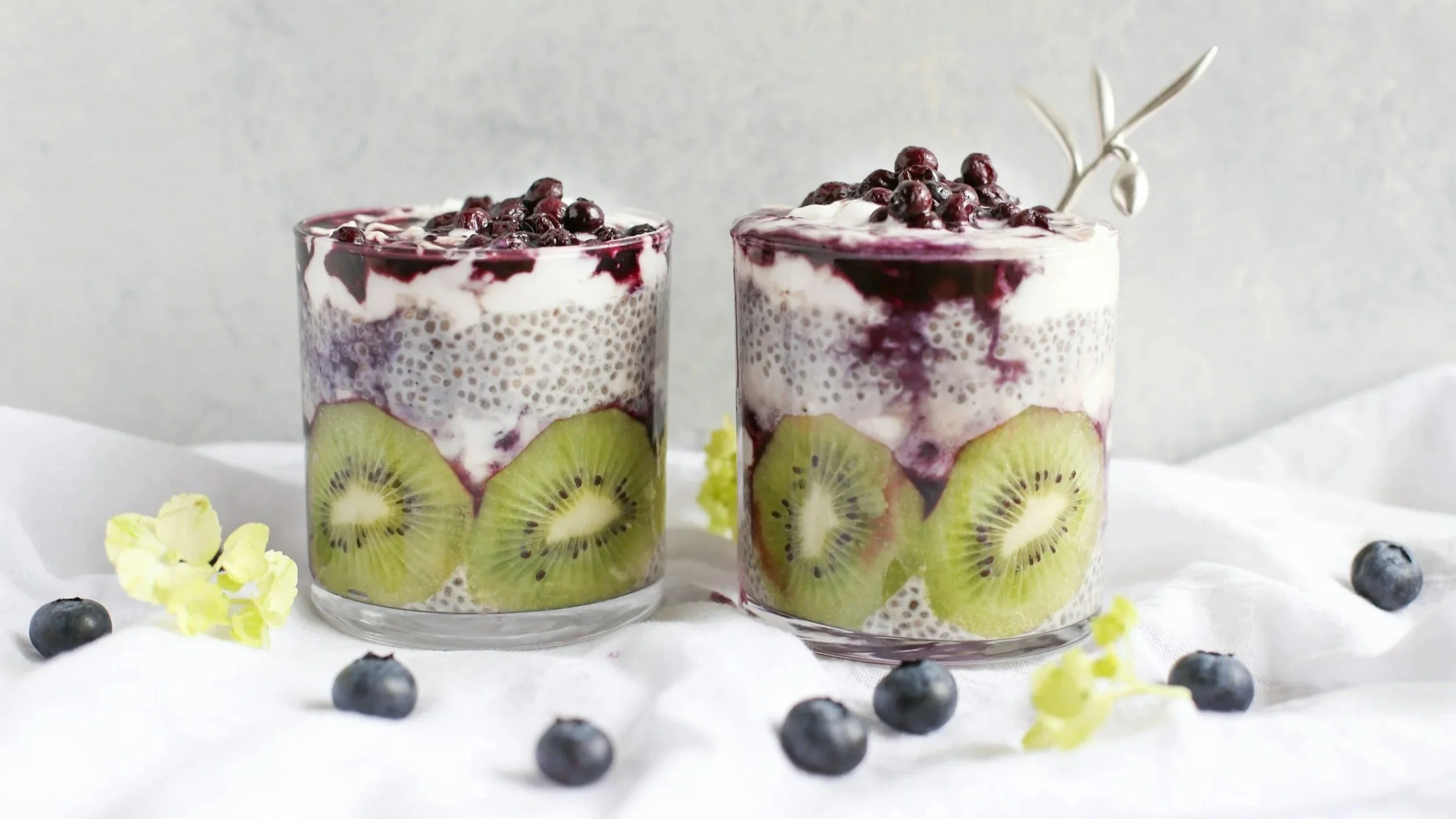
4. Chia Seed Pudding
Mix 3 tablespoons of chia seeds with 1 cup of almond or oat milk, a teaspoon of vanilla extract, and a drizzle of maple syrup. Refrigerate overnight. Top with banana slices, shredded coconut, or a few berries.
Why it works: Chia seeds form a gel when hydrated — a property that’s attracted interest in reflux research. A 2025 clinical trial of psyllium husk (another gel-forming fiber) as an adjunct to PPI therapy in LPR found superior symptom resolution compared to PPI monotherapy alone (Rana et al., 2025, PMID: 40226240). While that study evaluated psyllium specifically, the gel-forming mechanism is shared by chia.
5. Pumpkin Custard
Blend canned pumpkin puree with almond milk, eggs, maple syrup, cinnamon, ginger, and a pinch of nutmeg. Pour into ramekins and bake in a water bath at 325°F for 45–50 minutes.
Why it works: Pumpkin is low in fat and rich in fiber, with a mild pH that makes it well-tolerated by most people with reflux. The egg provides protein structure without the fat load of cream. No chocolate, no citrus, no mint.
6. Coconut Rice Pudding
Cook short-grain rice in light coconut milk with a cinnamon stick and vanilla bean. Sweeten gently with maple syrup. Serve warm or chilled with sliced banana.
Why it works: Rice is one of the most tolerated grains for reflux. Light coconut milk has significantly less fat than full-fat versions. Warm preparations are gentle on the upper GI tract.
7. Frozen Yogurt Bark
Spread plain Greek yogurt on a parchment-lined baking sheet. Drizzle with honey, top with sliced banana, pomegranate seeds, and granola. Freeze until solid, then break into pieces.
Why it works: Yogurt provides probiotics and protein that helps buffer gastric contents. The thin bark format naturally controls portion size.
Note: If dairy is a trigger, substitute with a coconut or oat-based yogurt alternative.
8. Melon Sorbet
Blend frozen cantaloupe or honeydew with a small drizzle of honey until smooth. Freeze, stirring every 30 minutes, until sorbet consistency.
Why it works: Melon is among the most alkaline fruits. Sorbet is naturally fat-free and avoids the reflux-triggering components of traditional ice cream.
9. Almond Flour Banana Muffins
Combine almond flour, mashed ripe banana, eggs, maple syrup, vanilla extract, baking soda, and cinnamon. Bake at 350°F for 18–20 minutes.
Why it works: Almond flour provides healthy fats in controlled amounts — much less than butter-based muffins. No chocolate, no citrus.
10. Warm Apple Compote with Oat Crunch
Dice apples (skin removed during healing phase), cook gently with water, cinnamon, and vanilla until soft. Top with toasted oats and honey.
Why it works: Cooked apples are gentle on the esophageal lining and generally well-tolerated. Cooking softens the fiber while still supporting digestion.
The Dessert Timing Strategy
When you eat your dessert matters almost as much as what you eat.
After lunch is the optimal time for a larger dessert. You have the most upright hours ahead of you, and your digestive system is typically at peak performance mid-day.
After dinner, keep it lighter. A small portion of banana nice cream or a baked pear is enough to satisfy the craving without overloading your stomach.
Never eat dessert and immediately lie down. The 2–3 hour buffer before bed applies to everything — gravity is part of your anti-reflux barrier.
Pair dessert with a warm herbal tea. Chamomile or ginger tea after a sweet dish supports motility and helps your body process the food efficiently.
A Note on the Restriction Mindset
If you’ve been avoiding all sweets for months because you’re afraid of triggering symptoms, I want to say something directly: restriction alone doesn’t heal. It doesn’t rebuild your mucosal lining. It doesn’t strengthen your LES. It doesn’t address the root contributors of your reflux.
What heals is a multi-layered approach — barrier optimization, strategic nutrition, nervous system regulation, and supplement support — that gives your body what it needs to rebuild the mechanisms that are failing.
Dessert can absolutely be part of that picture. Strategic dessert. Dessert that respects your barrier while honoring the fact that you’re a human being who deserves to enjoy food.
You don’t have to earn sweetness. You just have to be strategic about it.
Going Deeper
These recipes and strategies are a starting point. Inside the FLORA method, we go much deeper — mapping out your specific triggers, building a personalized meal plan (including desserts), and sequencing your healing phase so you can expand your diet with confidence.
→ Join the Reflux Relief Masterclass
Small hinges swing big doors. And sometimes the small hinge is realizing you can have a beautiful baked pear after dinner and still wake up feeling good.
xo, Molly