Sequoia Soothe Ingredients: The Science Behind Each One
If you've ever stared at a supplement label and thought, "But what does this actually do in my body?" you're asking the right question.
I formulated Sequoia Soothe because I couldn't find a single supplement designed specifically around how the esophageal and gastric lining maintains its integrity. Most products on the market are built for general "digestive comfort." That's too vague. Your esophagus deserves more specificity than that.
So let me walk you through exactly what's in Sequoia Soothe, why each ingredient is there, and what the published research says about how they work.
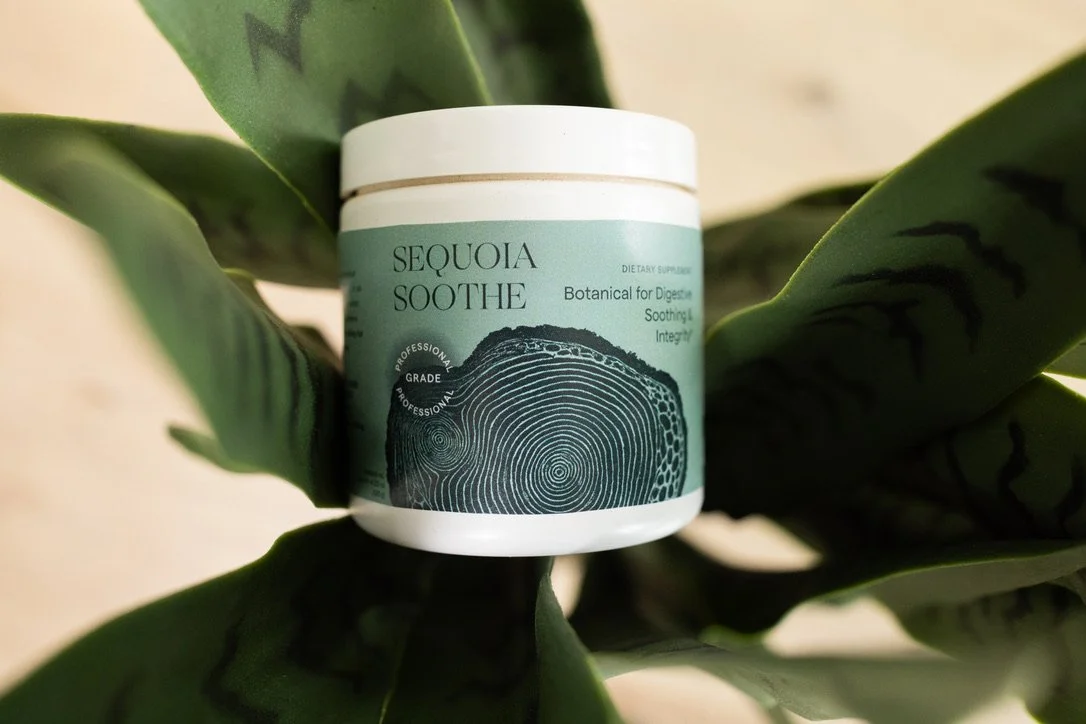
The Four Ingredients (and Why They Work Together)
Sequoia Soothe uses a dual-action approach: two ingredients provide immediate soothing, and two support the longer-term process of maintaining mucosal barrier integrity. That combination is intentional. Soothing alone is temporary. Structural support alone is slow. Together, they give your body both comfort and the raw materials it needs to maintain a healthy lining.
Here's what's in every serving (2 scoops, approximately 4 grams):
Slippery Elm (Ulmus rubra bark, 1,000 mg): Immediate Soothing on Contact
Slippery elm bark has been used for centuries as a demulcent, a substance that forms a soothing film over mucous membranes. When mixed with water, slippery elm produces a thick mucilage that coats the tissues of your mouth, throat, esophagus, and stomach as you drink it. This is one of the reasons Sequoia Soothe is a powder, not a capsule. The coating action starts the moment the liquid touches tissue.
A review in Current Gastroenterology Reports (Ahuja & Ahuja, 2019, PMID: 31289950, DOI) included slippery elm among complementary remedies for esophageal symptoms, noting its traditional use and calling for further clinical research. The authors identified slippery elm as one of several herbal products with "interesting mechanistic hypotheses" for symptom relief.
The honest truth: slippery elm has centuries of traditional use and a well-understood demulcent mechanism, but large-scale randomized clinical trials specific to the upper GI tract are still limited. I include it in this formula because the mechanism is sound, the safety profile is excellent, and the soothing quality of mucilage-forming botanicals is well established in traditional herbal practice.
At 1,000 mg per serving, the dose in Sequoia Soothe provides meaningful demulcent support.
DGL (Deglycyrrhizinated Licorice Extract, 300 mg): Support for Your Protective Mucus Layer
DGL is licorice root with the glycyrrhizin removed. That distinction matters: glycyrrhizin is the compound in licorice that can raise blood pressure. DGL does not have this effect, which makes it safe for daily use.
The mechanism behind DGL centers on mucus production. Your stomach and esophagus rely on a protective mucus layer to maintain tissue comfort and integrity. The thickness and quality of that mucus layer plays a role in how your digestive lining feels day to day.
A study published in the European Journal of Pharmacology (van Marle et al., 1981, PMID: 7250207, DOI) found that DGL stimulates the differentiation of mucus-secreting cells and accelerates mucus formation and secretion in the gastric lining. The researchers concluded that DGL's protective effect comes from enhanced mucus output, creating a better environment for healing.
Additional research in Scandinavian Journal of Gastroenterology (Russell et al., 1984, PMID: 6588541) studied DGL's effects on the gastric lining in animal models exposed to aspirin, finding that DGL supported mucosal integrity through both local and systemic pathways.
At 300 mg per serving, DGL in Sequoia Soothe supports the mucus layer that forms your first line of defense against acid and pepsin contact.
L-Glutamine (2,500 mg): Fuel for Your Gut Lining
L-glutamine is the most abundant amino acid in your bloodstream, and your intestinal cells use it as their primary fuel source. The cells that line your esophagus, stomach, and intestines (called enterocytes) turn over rapidly. They need a steady supply of glutamine to proliferate and maintain the tight junctions that keep your gut barrier intact.
When glutamine is depleted, research shows measurable consequences: villus atrophy, decreased expression of tight junction proteins, and increased intestinal permeability. Supplementing with glutamine can support barrier function and help maintain the integrity of the intestinal lining.
A 2017 review published in Current Opinion in Clinical Nutrition and Metabolic Care (Achamrah et al., PMID: 27749689, DOI) confirmed that glutamine is a major nutrient for maintaining intestinal barrier function in both animals and humans, and that supplementation can support gut barrier integrity.
A separate review in Amino Acids (Wang et al., 2014, PMID: 24965526, DOI) found that glutamine promotes enterocyte proliferation and survival, regulates intestinal barrier function, and protects the gut from atrophy under stress conditions.
A 2022 systematic review in PLoS ONE (Chantler et al., PMID: 35417467, DOI) also reported that the majority of studies using bovine colostrum and glutamine demonstrated a reduction in markers of gut cell damage and permeability compared to placebo conditions.
At 2,500 mg per serving, the dose in Sequoia Soothe is designed to provide meaningful support for the mucosal lining, not a token amount.
Zinc Carnosine (7.5 mg zinc as zinc L-carnosine complex): Stabilizing the Gastric Lining
Zinc carnosine is not the same as taking zinc and carnosine separately. The chelated complex binds to the gastric lining, which allows it to concentrate its effects right where they're needed most. This is the ingredient with some of the strongest clinical evidence for mucosal protection.
A randomized crossover trial published in Gut (Mahmood et al., 2007, PMID: 16777920, DOI) studied healthy volunteers (n=10) taking indomethacin (an NSAID) for five days. The control group experienced a threefold increase in gut permeability. The group co-administered zinc carnosine maintained normal permeability levels. In the same study's laboratory models, zinc carnosine stimulated a threefold increase in cell migration and proliferation.
Separately, researchers at Akita University (Odashima et al., 2002, PMID: 12498304, DOI) showed that zinc carnosine induces HSP72, a cytoprotective heat shock protein that enhances the mucosal lining's own protective ability. And a study in the Journal of Pharmacological Sciences (Ueda et al., 2009, PMID: 19542683, DOI) found that zinc carnosine is a potent inducer of heme oxygenase-1 (HO-1), an anti-oxidative stress enzyme that contributes to gastric mucosal protection.
This ingredient supports the gastric lining through multiple pathways: it helps stabilize existing tissue, supports normal cellular renewal, and activates your body's own protective enzymes.
Why These Four Together
Each ingredient addresses a different aspect of mucosal wellness. Slippery elm provides the immediate soothing coating you feel on the first sip. DGL supports the mucus layer that protects the lining. L-glutamine fuels the cells that maintain barrier integrity. Zinc carnosine supports tissue stability and activates your body's own protective enzymes.
You could buy each of these individually. Many of my clients have tried. The challenge is getting the right dose of each, in a form that actually reaches the tissue (powder, not capsule), without fillers, artificial flavors, or common reflux triggers.
That's what Sequoia Soothe was built for.
How to Take It
Mix 2 scoops into 4 to 8 oz of cool or warm water once daily. Best taken 30 to 60 minutes before a meal, or at least 1 hour after eating. You can add a touch of honey or cinnamon for flavor if you'd like.
For the first 1 to 2 weeks, most people notice the immediate soothing effect from slippery elm. The rebuilding ingredients (L-glutamine and zinc carnosine) work over time to support gut lining integrity, so consistency matters more than any single dose.
What Sequoia Soothe Is (and What It Isn't)
Sequoia Soothe is a professional-grade botanical supplement formulated to soothe, protect, and support resilience within your digestive system. It is vegan, gluten-free, soy-free, dairy-free, and third-party tested for purity.
Sequoia Soothe is not a replacement for your medications, and it is not intended to diagnose, treat, cure, or prevent any disease. If you're currently on a PPI or H2 blocker, Sequoia Soothe can be used alongside your prescribed therapy. Take it at least 1 hour away from acid-reducing medications.
If you're ready to give your esophageal and gastric lining the specific support it deserves, Sequoia Soothe is available now at sequoiasoothe.com. It's back in stock after selling out.
You don't have to figure this out alone.
With love,
Molly Pelletier, MS, RD

These statements have not been evaluated by the Food and Drug Administration. This product is not intended to diagnose, treat, cure, or prevent any disease.
References
1. Achamrah N, Déchelotte P, Coëffier M. Glutamine and the regulation of intestinal permeability: from bench to bedside. Curr Opin Clin Nutr Metab Care. 2017;20(1):86-91. PMID: 27749689. DOI
2. Wang B, Wu G, Zhou Z, et al. Glutamine and intestinal barrier function. Amino Acids. 2014;47(10):2143-54. PMID: 24965526. DOI
3. Chantler S, Griffiths A, Matu J, et al. A systematic review: Role of dietary supplements on markers of exercise-associated gut damage and permeability. PLoS One. 2022;17(4):e0266379. PMID: 35417467. DOI
4. van Marle J, Aarsen PN, Lind A, van Weeren-Kramer J. Deglycyrrhizinised liquorice (DGL) and the renewal of rat stomach epithelium. Eur J Pharmacol. 1981;72(2-3):219-25. PMID: 7250207. DOI
5. Russell RI, Morgan RJ, Nelson LM. Studies on the protective effect of deglycyrrhinised liquorice against aspirin and ASA plus bile acid-induced gastric mucosal damage, and ASA absorption in rats. Scand J Gastroenterol Suppl. 1984;92:97-100. PMID: 6588541.
6. Mahmood A, FitzGerald AJ, Marchbank T, et al. Zinc carnosine, a health food supplement that stabilises small bowel integrity and stimulates gut repair processes. Gut. 2007;56(2):168-75. PMID: 16777920. DOI
7. Odashima M, Otaka M, Jin M, et al. Induction of a 72-kDa heat-shock protein in cultured rat gastric mucosal cells and rat gastric mucosa by zinc L-carnosine. Dig Dis Sci. 2002;47(12):2799-804. PMID: 12498304. DOI
8. Ueda K, Ueyama T, Oka M, et al. Polaprezinc (Zinc L-carnosine) is a potent inducer of anti-oxidative stress enzyme, heme oxygenase (HO)-1: a new mechanism of gastric mucosal protection. J Pharmacol Sci. 2009;110(3):285-94. PMID: 19542683. DOI
9. Ahuja A, Ahuja NK. Popular Remedies for Esophageal Symptoms: a Critical Appraisal. Curr Gastroenterol Rep. 2019;21(8):39. PMID: 31289950. DOI