What Supplements Help with LPR Specifically?
If you have LPR — laryngopharyngeal reflux, sometimes called silent reflux — you already know the frustration. The throat clearing that won't stop. The hoarseness. The post-nasal drip. The globus sensation, like something's stuck in your throat that you can't swallow away.
And you've probably noticed something else: most reflux advice online doesn't seem to apply to you. The standard GERD recommendations — antacids, acid suppression, avoid tomatoes — don't address what's actually happening in your laryngopharynx. Because LPR isn't just GERD that traveled up a little higher. The damage mechanism is different, and the supplementation strategy needs to reflect that.
So let's talk about what actually helps — and more importantly, why it helps at a tissue and enzyme level.
The LPR Damage Mechanism: Pepsin Is the Problem
Before we talk about supplements, you need to understand what's causing the damage. In LPR, the primary offender isn't acid alone — it's pepsin. Pepsin is the digestive enzyme in your stomach that travels with reflux contents up into your laryngopharynx. And here's what makes LPR so persistent: pepsin can remain embedded in laryngeal tissue and reactivate at even mildly acidic environments from certain foods, beverages, or even carbonation, restarting the inflammatory cycle in your throat.
This is why acid suppression alone often fails for LPR. You can lower acid production, but if pepsin is already sitting in the tissue, the damage continues.
Any supplement strategy for LPR needs to address pepsin buffering, mucosal repair, and barrier integrity at the upper esophageal level. Here are the mechanisms that matter.
1. Alginate-Based Therapy
Alginates, derived from seaweed, form a physical raft that sits on top of your stomach contents after a meal. This raft acts as a mechanical barrier, reducing the number of reflux episodes that reach the laryngopharynx. This is a physical intervention, not a chemical one. It reduces contact time between pepsin filled reflux contents and your throat tissue.
Take an alginate supplement immediately after trigger meals or before bed, when reflux episodes are most likely. I consistently recommend Reflux Raft to my clients because of its unique alginate formula that has helped so many of them finally find relief from persistent symptoms. Shop Reflux Raft here.
2.Slippery Elm & DGL (Deglycyrrhizinated Licorice)
Slippery Elm and DGL are two mucilaginous herbs that supports mucosal integrity — specifically, the protective lining of your esophageal and laryngeal tissue. When that mucosa is compromised by repeated pepsin exposure, it becomes more vulnerable to further damage. Slippery elm and DGL promote mucus secretion along the GI tract lining and support the tissue repair process at the mucosal surface.
This is barrier repair. It's supporting the tissue's ability to protect itself.
3. Zinc Carnosine
Zinc carnosine has a specific affinity for damaged mucosal tissue. It concentrates at sites of injury where it protects cells, reduces inflammatory signaling, and helps stabilize damaged tissue so it can regenerate. In the context of LPR, where pepsin has been degrading laryngeal mucosa, zinc carnosine supports the rebuilding of that protective barrier.
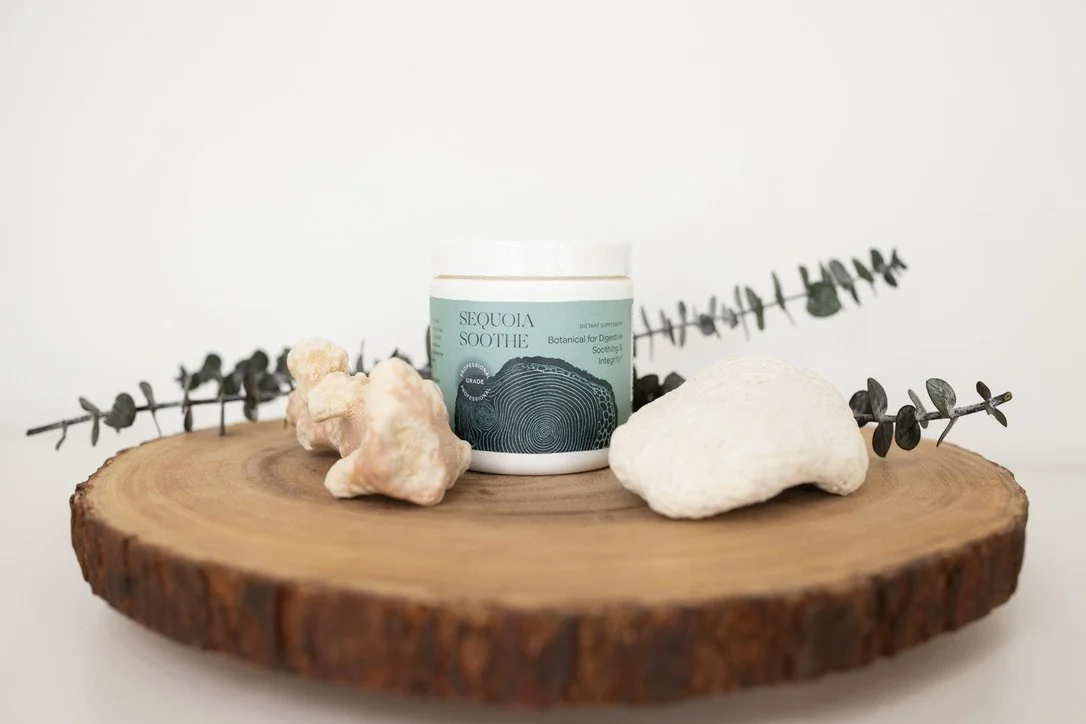
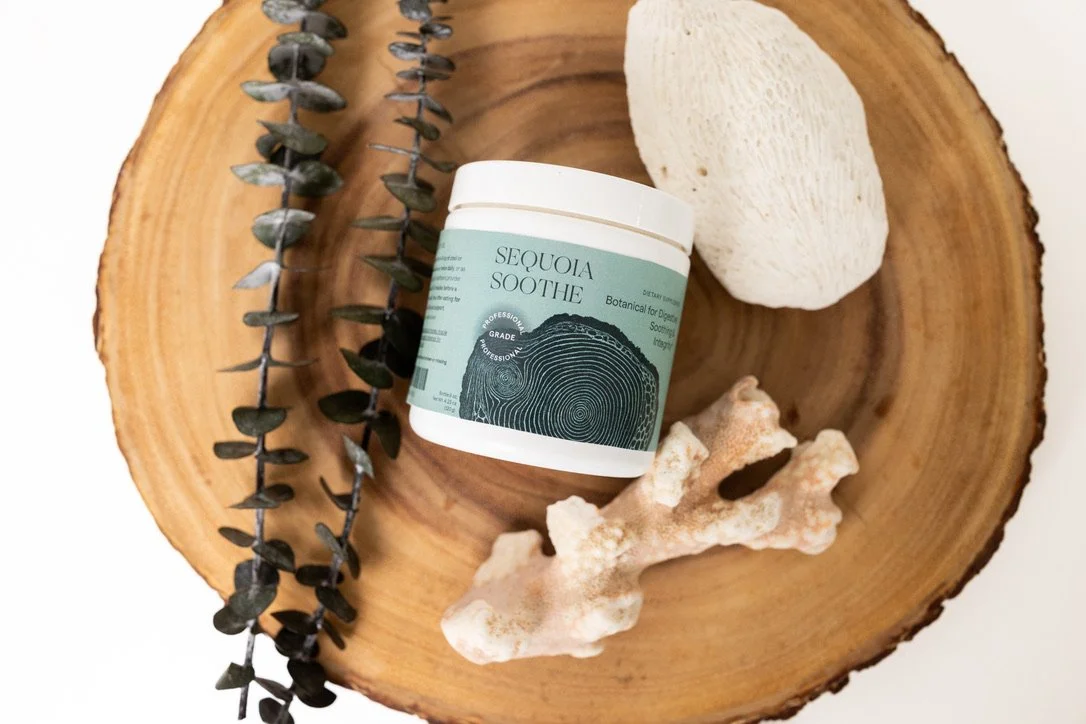
This is why we created Sequoia Soothe, our 4-in-1 mucosal support blend. Sequoia Soothe is a combination of slippery elm, DGL, zinc carnosine, and L-glutamine, in the right clinical dosages we use with our clients (so you don’t have to take everything separately!)
4. Psyllium Husk (Strategic Fiber)
This one surprises people. Psyllium, a soluble fiber, forms a viscous gel in the upper GI tract. It slows gastric emptying in a way that reduces the pressure differential driving contents upward. And it supports motility further downstream, which matters because delayed gastric emptying is a root contributor to both GERD and LPR.
A groundbreaking 2025 randomized controlled trial (Rana et al., PMID: 40226240) studied 505 patients with laryngopharyngeal reflux (LPR) over 16 weeks.
The results:
● PPI + psyllium husk: 82% symptom resolution
● PPI + prokinetics: 75% symptom resolution
● PPI alone: 65% symptom resolution
Psyllium outperformed motility medications. The Reflux Symptom Index (RSI) dropped by an average of 9.70 points in the psyllium group.
That's not a small difference. That's a statistically significant advantage across every single outcome measure. From fiber.
5. Melatonin
Melatonin isn’t just a sleep hormone, it actually plays a direct role in protecting the upper digestive tract, which is why it’s gaining attention in conditions like LPR. Melatonin has antioxidant and mucosal-protective effects, helping defend against oxidative damage and supporting tissue healing.
A 2010 study (Kandil et al., PMID: 20082715) found that when supplemented, melatonin helped improve classic reflux symptoms and, more importantly, targeted some of the root mechanisms behind reflux: it increased lower esophageal sphincter (LES) tone, reduced acid output, and raised esophageal pH.
While it’s not a replacement for standard treatments, melatonin could be a powerful adjunct. Especially for patients dealing with nighttime symptoms, stress-related reflux, or persistent throat irritation.
What This Means for Your Protocol
The question isn't whether supplements belong in your LPR healing phase. The question is: are you using them strategically? Targeting the right mechanisms, in the right forms, at the right time?
Each of these works on a specific piece of the LPR puzzle: pepsin buffering, mucosal repair, barrier formation, motility support, and LES pressure. None of them is a standalone fix. Together, layered into a protocol that also addresses nervous system regulation, dietary strategy, and breathing mechanics, they become part of the architecture of healing.
This is exactly where a 1:1 session at FLORA can make the difference. Instead of guessing or stacking random supplements, you’re guided through a personalized plan that connects your symptoms to the root cause. Because with LPR, it’s not about doing more, it’s about doing what’s targeted.
You deserve a protocol that actually explains why. You can learn more and apply HERE.
xo, Molly

References
Leiman DA, Riff BP, Morgan S, et al. Alginate therapy is effective treatment for GERD symptoms: A systematic review and meta-analysis. Dis Esophagus. 2017;30(5):1-9. doi:10.1093/dote/dow020
Ghalayani P, Emami H, Pakravan F, et al. Comparison of triamcinolone acetonide mucoadhesive film with licorice mucoadhesive film on radiotherapy-induced oral mucositis: A randomized double-blinded clinical trial. Asia-Pacific Journal of Clinical Oncology. 2014;13(2):48-56. doi: 10.1111/ajco.12295
Efthymakis K, Neri M. The role of Zinc L-Carnosine in the prevention and treatment of gastrointestinal mucosal disease in humans: a review. Clin Res Hepatol Gastroenterol. 2022;46(7):101954. doi:10.1016/j.clinre.2022.101954
Rana AK, Sharma R, Verma M, Singh AD, Mehrotra A. Efficacy of Psyllium Husk as an Adjunct to PPI in Treating Laryngopharyngeal Reflux: A Clinical Perspective. Indian J Otolaryngol Head Neck Surg. 2025;77(4):1745-1752. doi:10.1007/s12070-025-05387-7
Kandil TS, Mousa AA, El-Gendy AA, Abbas AM. The potential therapeutic effect of melatonin in Gastro-Esophageal Reflux Disease. BMC Gastroenterol. 2010;10:7. Published 2010 Jan 18. doi:10.1186/1471-230X-10-7