Vagus Nerve Exercises for Better Digestion: A Reflux Dietitian’s Protocol
If you’ve been doing everything “right” for your reflux — avoiding triggers, eating smaller meals, elevating the bed — and your symptoms still flare unpredictably, there’s a root contributor you may not have addressed yet.
Your vagus nerve.
As a registered dietitian specializing in acid reflux, GERD, and LPR, I talk about the vagus nerve with nearly every client. Not because it’s trendy — because it’s clinically essential. Your vagus nerve is the primary communication pathway between your brain and your digestive system. When it’s functioning well, digestion works. When it’s not, everything downstream suffers: motility slows, LES coordination weakens, gastric emptying delays, and reflux events increase.
The good news: vagal tone is trainable. And the practices that improve it are simple, evidence-informed, and take minutes.
What Your Vagus Nerve Actually Does for Digestion
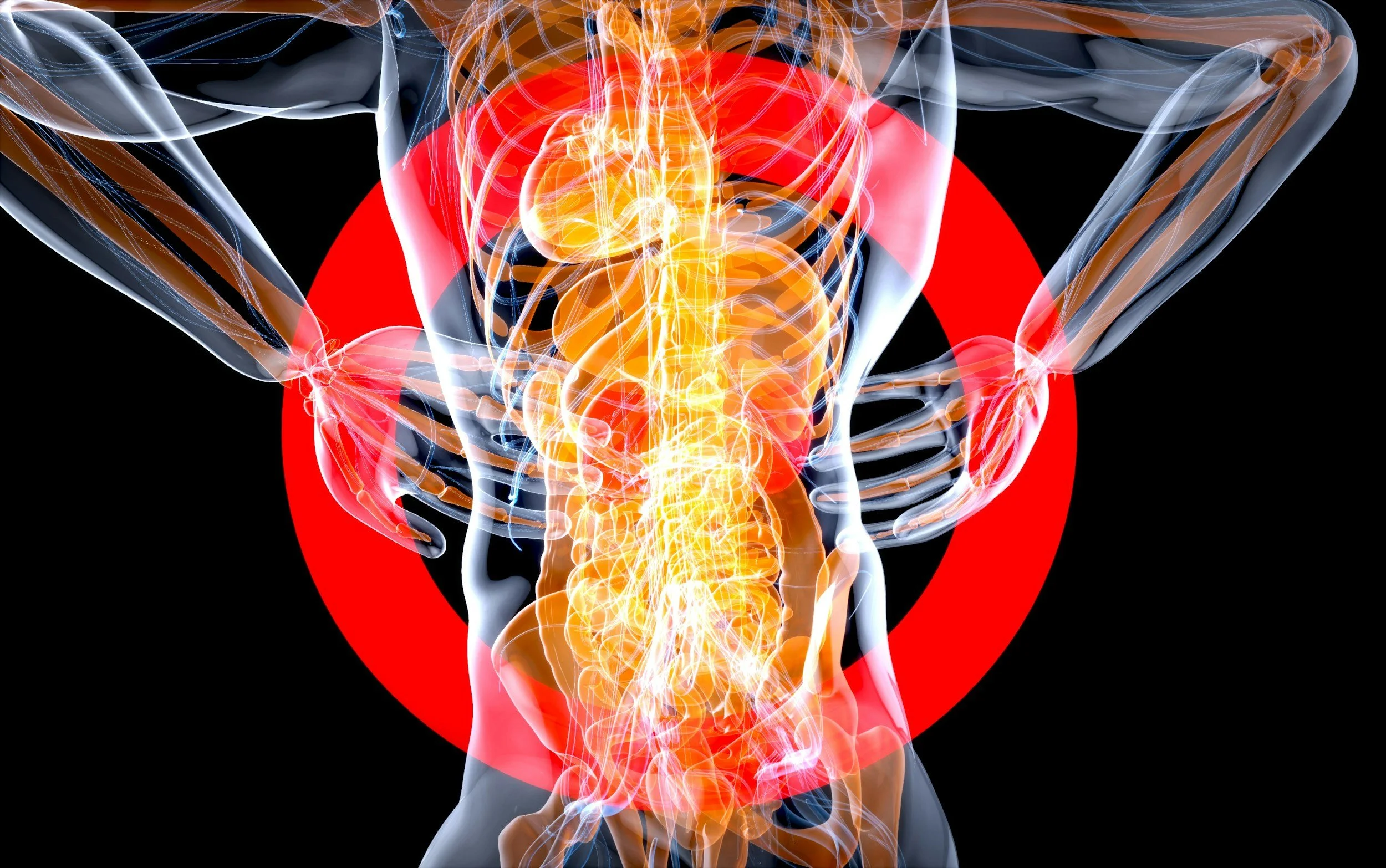
The vagus nerve is the longest cranial nerve in your body. It runs from your brainstem down through your neck, chest, and abdomen, innervating your esophagus, stomach, and intestines along the way. It’s the backbone of what researchers call the gut-brain axis — the bidirectional communication highway between your central nervous system and your digestive tract.
When your vagal tone is strong and your body is in a parasympathetic state — “rest and digest” — digestion works as it should:
Your LES — the lower esophageal sphincter — coordinates properly, opening when you swallow and closing tightly afterward
Gastric motility is active, moving food through your stomach at the right pace
Gastric acid and digestive enzymes are secreted in coordination with your meals
Your diaphragm functions with full range of motion, supporting the anti-reflux barrier
When vagal tone drops — from chronic stress, poor sleep, or sustained fight-or-flight activation — the opposite happens. Blood flow shifts away from your gut. Your diaphragm tightens. LES coordination breaks down. Gastric emptying slows, increasing the intragastric pressure that drives reflux.
This is why stress and reflux are so tightly linked. It’s not psychological. It’s physiological. And addressing it isn’t optional — it’s part of the protocol.
The Research: Vagal Tone and Gastric Function
Lu et al. (2018), published in Neurogastroenterology and Motility (PMID: 29797377, PMC: 6160317), demonstrated that vagus nerve stimulation significantly accelerated gastric emptying, increased pyloric sphincter relaxation, and amplified antral contraction amplitude in a preclinical rat model. The degree of pyloric relaxation correlated directly with gastric emptying rate (r = 0.59, P < .001). ⚠️ See fact-check callout below — this is an animal study; disclose before using in client-facing content.
A 2025 systematic review published in Gastroenterology Report (Veldman, Hawinkels & Keszthelyi, PMID: 39867596) analyzed seven randomized controlled trials of non-invasive vagus nerve stimulation across 644 patients with functional dyspepsia, IBD, IBS, and abdominal pain-related functional GI disorders. Non-invasive VNS significantly improved symptoms across all patient subsets compared with sham stimulation. The authors note that findings are preliminary — studies had small sample sizes and heterogeneous designs — and further research is warranted. GERD was listed as a target condition in the review’s scope, though the included RCTs focused on other functional GI conditions.
Separately, Eherer et al. (2012), American Journal of Gastroenterology (PMID: 22146488), showed in a prospective randomized controlled trial (n 19, 10 training / 9 control) that diaphragmatic breathing training significantly decreased esophageal acid exposure time (9.1±1.3% vs. 4.7±0.9%, P < 0.05) and reduced on-demand PPI usage at 9-month follow-up. This study works in part through vagal activation — diaphragmatic breathing mechanically stimulates the vagus nerve, which contributes to improved LES function and reduced reflux.

5 Vagus Nerve Exercises for Better Digestion
1. Diaphragmatic Breathing (The LES Lock)
This is the cornerstone — and the one with the strongest reflux-specific evidence. Deep, slow belly breathing is the most direct way to stimulate your vagus nerve.
How: Inhale through your nose for 4 counts, directing the breath into your belly. Exhale through pursed lips for 6 counts. Aim for 4–6 breaths per minute. Practice for 5–10 minutes, ideally 1 hour after meals.
Why it works: The vagus nerve runs directly through your diaphragm. Deep belly breathing creates rhythmic vagal stimulation with every breath cycle, activating parasympathetic tone. Simultaneously, the crural diaphragm physically supports the LES, increasing barrier pressure. This addresses two root contributors at once: nervous system regulation and barrier mechanics.
Check out this blog: Diaphragmatic Breathing for Acid Reflux: How 10 Minutes a Day Can Strengthen Your LES

2. The 5+1 Method (Pre-Meal Vagal Activation)
One of the simplest interventions in the FLORA protocol — and consistently one of the most impactful for clients.
How: Before each meal, take 5 slow diaphragmatic breaths (4-count inhale, 6-count exhale). Then pause for 1 moment of gratitude. 60–90 seconds total.
Why it works: The 5 breaths shift your autonomic nervous system toward parasympathetic dominance. Positive emotional states have been shown to increase heart rate variability — a direct marker of vagal tone. You’re priming your digestive system before a single bite: better acid secretion, better motility, better LES coordination.

3. Humming and Extended Vocal Exhale
Your vagus nerve innervates the vocal cords and larynx. Vibrations in this area — from humming or extended exhale — mechanically stimulate the nerve.
How: Hum at a comfortable, low pitch for 1–2 minutes. Focus on feeling the vibration in your throat and chest. Alternatively, extend your exhale with an audible “ahhh” or “om” — the sustained vibration is what activates the nerve.
Why it works for reflux: Vocalization stimulates the vagus nerve at the laryngeal level — the area most affected by LPR. For clients with silent reflux symptoms (throat clearing, post-nasal drip, hoarseness, globus sensation), this is a particularly relevant practice because it targets the nerve branch closest to the affected tissue.
4. Cold Water Face Immersion (The Dive Reflex)
Brief cold exposure to the face triggers the mammalian dive reflex — an automatic parasympathetic response that activates vagal pathways.
How: Splash comfortably cold water on your face and the sides of your neck, or hold a cold pack against your cheeks and forehead for 30 seconds. Alternatively, submerge your face in a bowl of cold water for 15–30 seconds while holding your breath.
Why it works: The trigeminal nerve in your face communicates directly with the vagus nerve. Cold stimulation of the face rapidly activates the parasympathetic nervous system — one of the fastest vagal activation techniques available. Particularly useful for clients whose reflux worsens with acute stress or anxiety.
5. Gentle Movement After Meals (The Nervous System Walk)
A slow 10–15 minute walk after eating supports both vagal tone and gastric motility. This is gentle, rhythmic movement — not exercise.
How: After your meal, take a slow walk at a relaxed pace, breathing through the nose. If walking isn’t accessible, gentle seated movement or rocking also provides rhythmic vagal input.
Why it works: Upright posture after eating reduces the pressure gradient that drives reflux. Gentle walking stimulates the vagus nerve through rhythmic movement and breathing. Improved gastric motility means food moves through your stomach more efficiently, reducing the distension and intragastric pressure that triggers transient LES relaxations.
Avoid: Vigorous exercise within 2 hours of eating — this increases intra-abdominal pressure and can worsen reflux. The goal here is gentle, parasympathetic-supporting movement.

What These Exercises Have in Common
Every practice on this list does the same fundamental thing: it shifts your autonomic nervous system from sympathetic dominance (fight-or-flight) to parasympathetic dominance (rest-and-digest) by activating your vagus nerve.
This matters for reflux because your LES, gastric motility, acid secretion, and diaphragmatic tone are all under autonomic control. When the nervous system is dysregulated, the entire digestive architecture is affected. When you restore vagal tone, the architecture starts functioning again.
This is nervous system regulation as a clinical strategy — not a wellness platitude. It’s one of the root contributors to reflux that medication alone cannot address.
Building a Daily Vagal Tone Practice
You don’t need to do every practice every day. A realistic daily structure:
Morning: 2 minutes of humming or extended vocal exhale (while getting ready)
Before each meal: The 5+1 Method (60–90 seconds)
After largest meal: 5–10 minutes of diaphragmatic breathing + gentle walk
Before bed: 5 minutes of diaphragmatic breathing
As needed: Cold water face immersion during acute stress
Total: ~20–25 minutes spread across the day. Most of it integrates into what you’re already doing. Consistency matters more than duration. Your vagus nerve responds to regular, repeated signals. Over weeks and months, your baseline vagal tone shifts — and your digestive system reflects it.
This Is the Missing Piece
If you’ve been focused exclusively on diet and medication for your reflux, you’re addressing part of the picture. An important part — but not the full picture.
Your nervous system is a root contributor. Your vagal tone directly affects LES function, gastric motility, and the coordination of your entire digestive tract. Addressing it alongside food strategy, barrier mechanics, and supplement support is how lasting relief happens.
→ Join the Reflux Relief Masterclass - including a full nervous system regulation module with guided practices.
→ Or start with the 14-Day Reflux Reset Guide - it includes a daily breathing protocol and meal framework.
This is the work. And you’re ready for it.
With love,
Molly Pelletier, MS, RD