If plain water sets off burning, throat tightness or a lump-in-the-throat feeling, and your endoscopy came back normal, two things can explain it: irritated tissue, hypersensitive nerves, or both. Neither one shows up on a scope. Your symptoms are real, and your test result is real too.
What a normal endoscopy does and does not tell you
An endoscopy is a camera. It shows visible structural damage like erosions or inflammation, and a clear result is good news. It does not measure how sensitive the nerves in your esophagus are. Symptoms that are not explained by a blockage, a motility disorder or GERD are grouped under functional esophageal disorders, where visceral hypersensitivity (nerves that overreact to normal input) is thought to play a role.
Two reasons water can hurt
Irritated tissue. Reflux carries pepsin, the enzyme your stomach makes to digest protein, up toward your throat. In voice box biopsies, pepsin was found in 8 of 9 people with LPR and 0 of 12 controls, and it was linked to the loss of a protective enzyme in the tissue, which leaves it easier to irritate.
Hypersensitive nerves. The nerves lining your esophagus are turned up too high, so neutral input like swallowing registers as discomfort.
Many people with LPR have both at once, which is why the tissue and the nervous system need attention together.
Why your nervous system is part of this
A 2025 case-control study of 45 people with LPR and 29 healthy controls found perceived stress scores nearly 8 points higher in the LPR group, and reflux symptom scores rose alongside anxiety scores. This is an association, so it does not prove that stress causes LPR. It is the reason we treat the nervous system as a root contributor instead of an afterthought.
What we work on with clients
The barrier: The LES Lock, 1 to 5 minutes of diaphragmatic breathing with 360 ribcage expansion immediately after meals, up to 5 times a day. Belly out on the inhale, ribs widen front, sides and back, and exhale slower than you inhaled.
The nervous system: Nervous System Snacks, 1 to 5 minute regulation breaks, 1 to 3 times a day, away from meals. Extended exhales or hand-on-belly breathing.
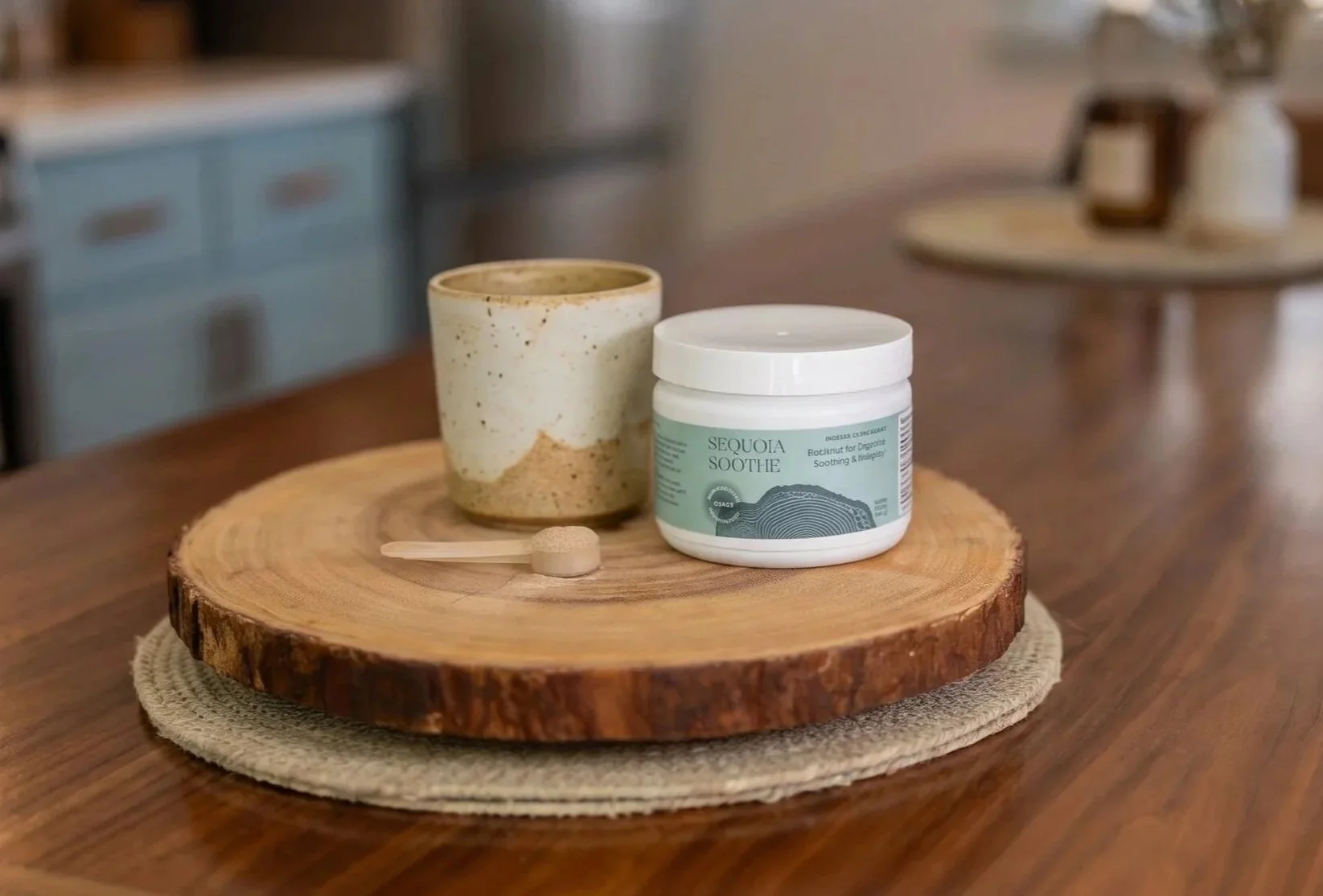
The tissue: Soothing support for the throat and esophagus. This is why I formulated Sequoia Soothe, an unflavored powder with slippery elm, DGL, L-glutamine and zinc carnosine that coats and soothes on the way down.
When to get checked
If swallowing is painful or food gets stuck, tell your doctor promptly. A normal endoscopy does not change that.
Want a plan built around your root contributors? Work with our expert team of reflux Dietitians. You can also explore the Reflux Relief Masterclass and the FLORA App for day-to-day support.
xo,
Molly

References
Aziz Q, et al. Functional Esophageal Disorders. Gastroenterology. 2016. Rome IV review. PMID 27144625.
Johnston N, et al. Pepsin and carbonic anhydrase isoenzyme III as diagnostic markers for laryngopharyngeal reflux disease. Laryngoscope. 2004. Laryngeal biopsies, 9 LPR patients vs 12 controls. PMID 15564833.
Barillari MR, et al. Laryngopharyngeal reflux and psychological distress: a vicious cycle worth investigating. Eur Arch Otorhinolaryngol. 2025. Case-control, n=45 LPR vs 29 controls; Perceived Stress Scale-10 21.6 vs 13.9. PMID 40258993.