Why Meal Prep Fails for Reflux and What to Do Instead
You spent four hours on Sunday roasting, portioning, and stacking containers. By Wednesday, you're staring at the fridge wanting none of it. Your family ate through half your prep. A recipe that was supposed to be "safe" flared your reflux. And you're exhausted by the idea of eating the same chicken and rice for the fifth time this week.
If traditional meal prepping has felt like more stress than it's worth — you're not failing. The approach itself is the problem.

Why Traditional Meal Prep Backfires for Reflux
Most meal prep advice assumes your body responds the same way to the same foods every single day. When you're dealing with acid reflux, GERD, or LPR, that's not how it works. Your tolerance for certain foods shifts depending on your stress levels, your sleep, your cycle, and where you are in your healing phase.
Here's what's actually happening physiologically. When you feel pressured — locked into rigid recipes, second-guessing every ingredient, anxious about trigger foods — your sympathetic nervous system activates. That's your fight-or-flight response. And when your body is in that state, it directly impacts your digestion. Sympathetic activation reduces the resting pressure of your lower esophageal sphincter (LES), the muscular valve that keeps stomach contents where they belong. It also slows gastric motility — meaning food sits in your stomach longer, increasing the chance of reflux episodes (Halland et al., 2021, Gut, review of lifestyle factors in GERD management).
So the stress of rigid meal prep doesn't just feel bad. It can physiologically worsen your symptoms — even if the food itself was fine.
As FLORA dietitian Kimber explained on the Reflux Revolution Podcast, many of our clients come in already overwhelmed by the belief that they need to be a "meal prepping machine" to heal their reflux. That belief is doing more harm than good.
The Ingredient Prep Method
Instead of prepping full meals, prep individual ingredients. Kimber calls this "ingredient prepping," and it's one of the most effective shifts we see clients make inside our 1:1 FLORA program.
The framework is simple: at the beginning of each week, prep one protein, one carbohydrate, and one produce item. That's it. Three components — prepped and ready to mix and match throughout the week.
This could look like a batch of hard-boiled eggs or grilled chicken for your protein. Rice or roasted potatoes for your carb. A sheet pan of roasted root vegetables — sweet potatoes, carrots, parsnips — for your produce. Root vegetables are a strong choice here because they're rich in soluble fiber, which supports gastric motility and feeds the beneficial bacteria that produce short-chain fatty acids (SCFAs) in your colon. SCFAs help maintain mucosal barrier integrity throughout your GI tract — and that barrier is one of your body's primary defenses against reflux-related tissue damage.
From there, you combine them differently every day. A rice bowl one night. A simple plate with chicken and roasted veggies the next. The key is flexibility — you're not locked into specific recipes. You adjust portions and combinations based on how you're feeling that day.
Family Meals Without Feeling Like "The Difficult One"
One of the biggest challenges our clients face is cooking for a family with different dietary needs. You don't want to make two separate dinners — but you also can't eat the spicy taco meat your partner loves.
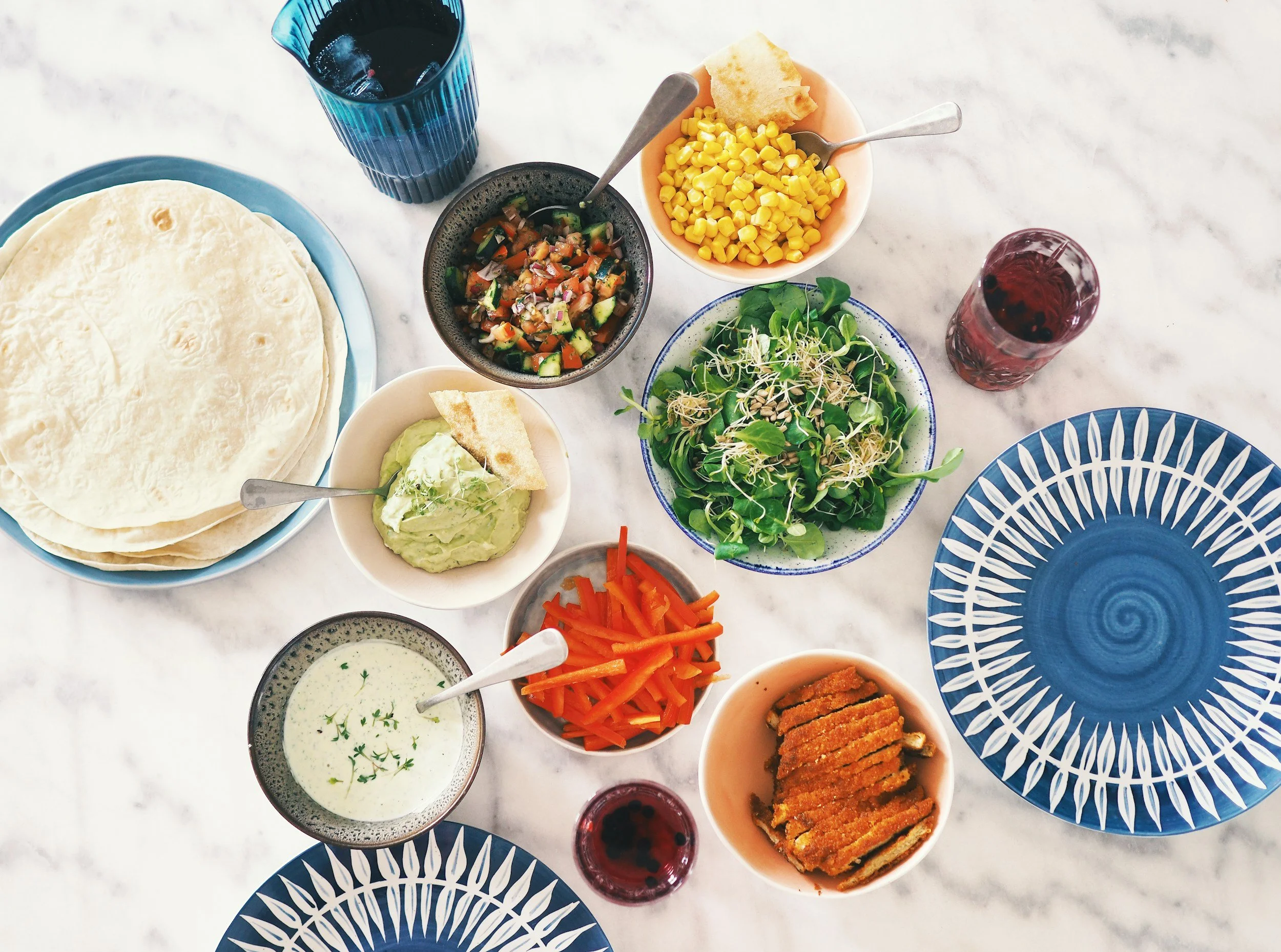
The ingredient prep method solves this naturally. You build a neutral, reflux-friendly base — plain protein, a simple starch, fresh vegetables — and set out toppings and additions separately. Your family adds their hot sauce, raw garlic, or onion on their own plates. You add your reflux-safe seasonings and a sauce from the FLORA app that skips common triggers.
This matters beyond convenience. When you feel isolated at meals — eating something completely different, managing a separate plate — it creates emotional stress. And that emotional stress feeds right back into sympathetic nervous system activation, which circles back to reduced LES pressure and impaired motility. Eating together, from the same base, keeps you connected and keeps your nervous system calmer.
Emergency Meals for When Your Prep Runs Out
Even with the best planning, things go sideways. Your family eats through your prep by Tuesday. You get home late and can't face cooking. These are the moments that used to send you into a spiral — reaching for takeout that flares your symptoms, or skipping meals entirely.
Skipping meals is a bigger deal than most people realize. When your stomach is empty for extended periods, gastric acid still gets produced — but there's no food to buffer it. That acid can reflux more easily, especially if your LES pressure is already compromised.
A short list of "break glass in case of emergency" meals changes everything. These are 5–10 minute meals from pantry staples and fridge basics that still hit the protein-carb-veggie framework:
Oatmeal bowl with a scoop of protein powder and a sliced banana. Oats are a soluble fiber source that helps buffer gastric acid and supports motility.
"Adult lunchable" — whole grain crackers, cheese, sliced turkey, and a handful of blueberries.
Yogurt bowl with granola and a drizzle of honey. If you tolerate dairy, the probiotics in yogurt support your gut microbiome — and emerging research connects microbial diversity to improved esophageal barrier function.
Simple quesadilla with cheese and pre-cut veggies on a whole wheat tortilla.
These aren't fancy. They don't need to be. They keep you fed and out of the stress spiral that makes reflux worse.
DIY vs. Store-Bought: Where It Actually Matters
Store-bought convenience foods can save time, but some categories are worth making yourself — especially in the early stages of healing when your mucosal barrier is still rebuilding.
Salad dressings are one of the biggest ones. Most commercial dressings are built on a base of vinegar, garlic, and onion — three of the most common reflux triggers. Vinegar is highly acidic (pH 2–3), and in the early healing phase, that acidity can reactivate pepsin — the digestive enzyme that travels with refluxate and damages tissue even in low-acid environments. Garlic and onion can transiently relax the LES, increasing reflux episodes.
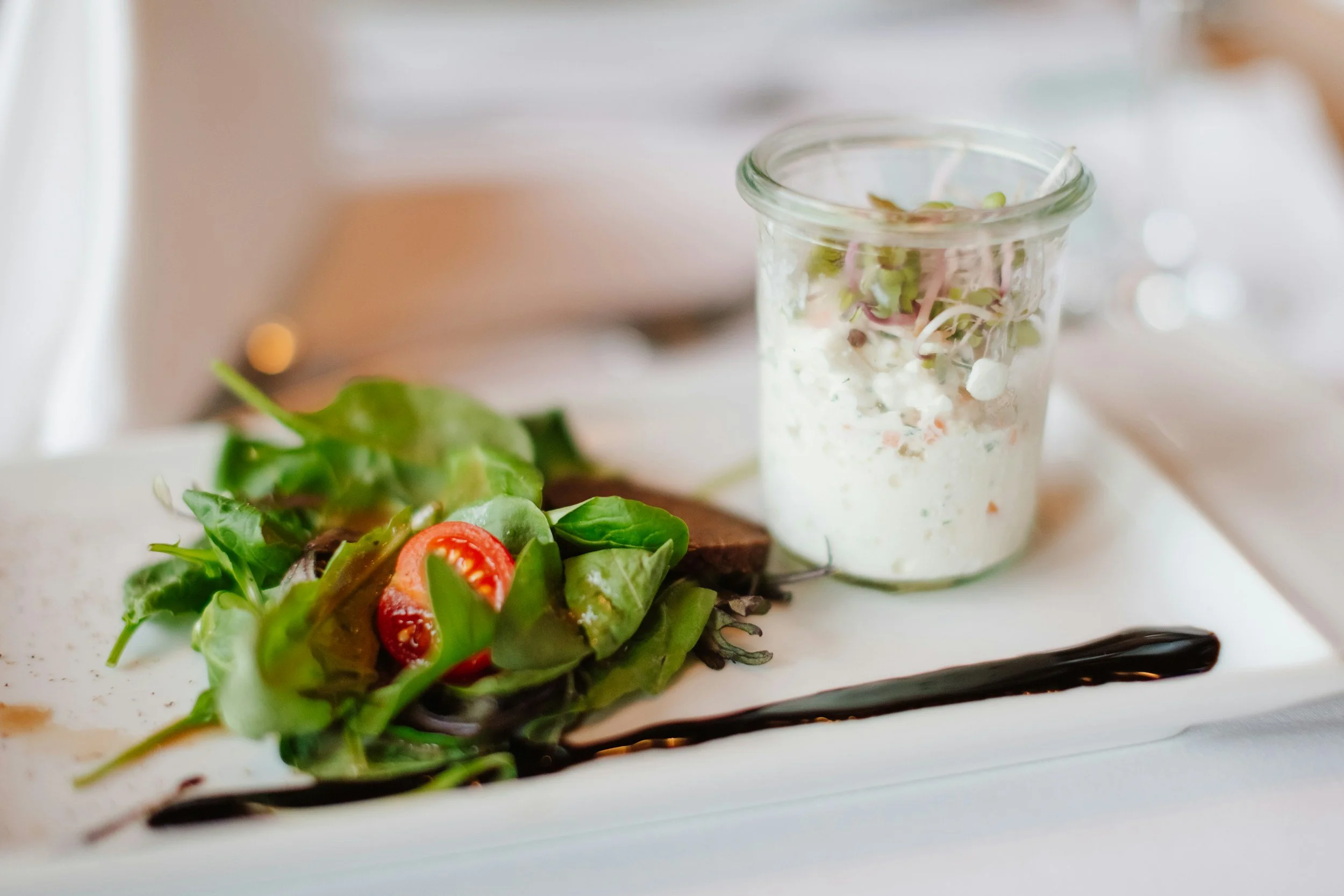
Making your own dressings lets you control exactly what goes in. The FLORA app has several options that skip the vinegar base and use gentle ingredients instead. As you heal and your tolerance improves, you can start reintroducing store-bought options. Yogurt-based dressings are usually a great stepping stone.
Sauces are another area where DIY pays off. Blending roasted vegetables like sweet potato with a little parmesan creates a creamy pasta sauce without common trigger ingredients. Batch it, freeze it, and you've got a flavor upgrade ready to pull out any night of the week.
Your Next Step
You don't need a Pinterest-perfect meal prep setup to eat well with reflux. You need a framework that bends with your week, your symptoms, and your life.
Start here: this weekend, prep one protein, one carb, and one veggie. Keep a list of three emergency meals on your fridge. And give yourself permission to keep it simple.
This is exactly the kind of strategic, personalized work we do together inside FLORA — mapping your healing phase, identifying your specific triggers, and building a meal framework that fits your real life. If you're ready to stop guessing and start healing, apply to work with us here.