Short answer: Protein supports your lower esophageal sphincter, so protein is rarely the trigger. When a shake sets off reflux, the usual drivers are a large, calorie-dense liquid arriving fast, fermentable fibers and sugar alcohols that create gas and pressure, acidified "clear" formulas, and flavors like chocolate. The best protein powder for acid reflux has a short ingredient list, no inulin or sugar alcohols, moderate calories per serving, a neutral pH, and third-party testing, and it is sipped slowly in a moderate volume.
If your "healthy" shake is the thing that sets you off
You were told to get more protein. Maybe you started a GLP-1 medication and your care team said to prioritize it. Maybe you are training hard and a shake is the only thing you can get down after a session. Maybe mornings are chaos and a shake is breakfast.
And then, twenty minutes later, the burn. Or the burping. Or the throat tightness that lasts until lunch.
It is confusing, because protein is supposed to help with reflux. It still does. So let's walk through what is actually happening in your stomach when a shake goes wrong, what to look for on the label, and how to take one so it sits well.
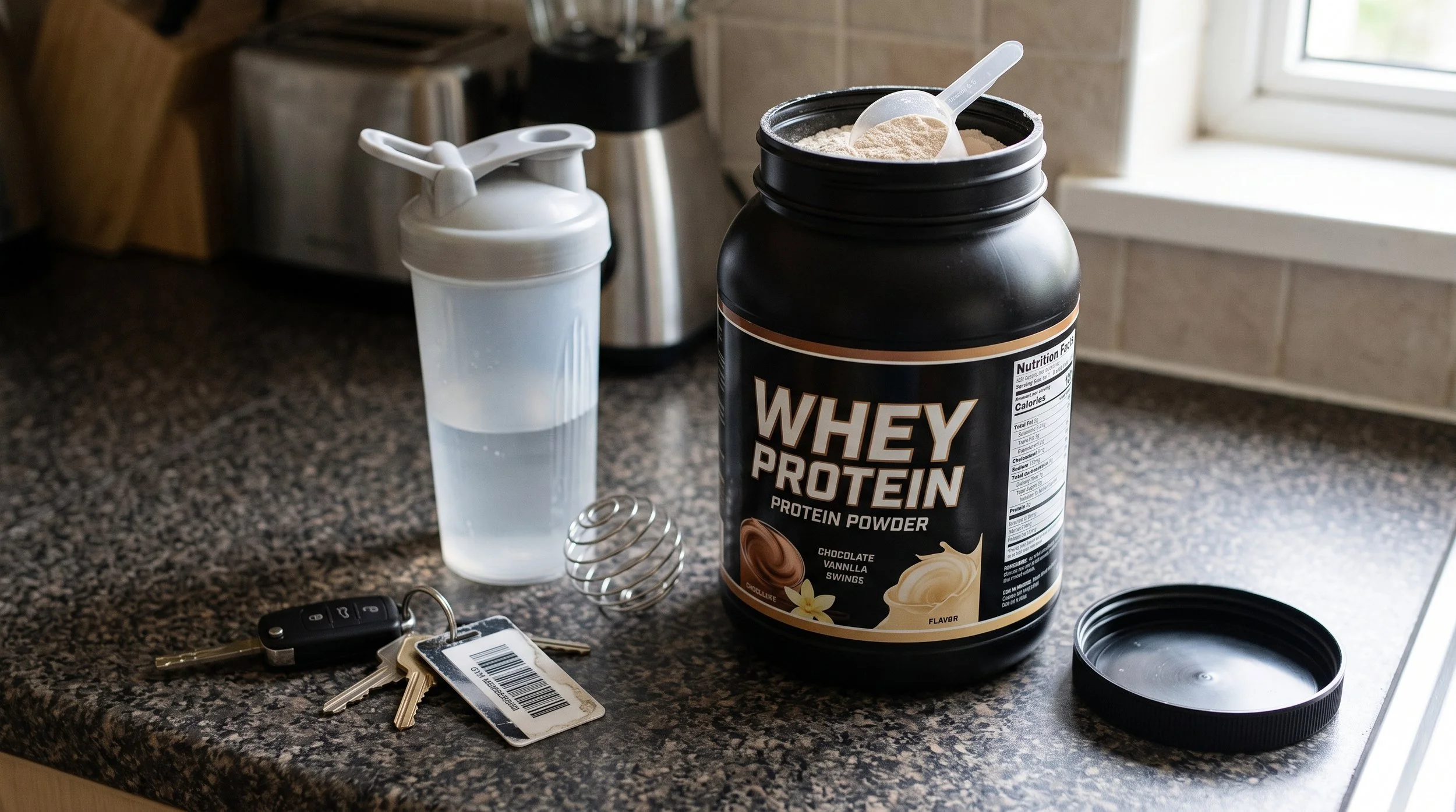
Does protein cause acid reflux?
Short answer: No. Protein supports your lower esophageal sphincter (LES), the little muscle that is supposed to keep stomach contents in your stomach.
Classic manometry research found that a protein meal raised LES pressure, while a fat meal lowered it (Nebel and Castell, 1972, Gastroenterology, PMID 5079488). Protein also supports tissue repair, keeps you full, and protects muscle, which matters a great deal if you are losing weight on a GLP-1 or fueling for training.
So when a protein shake sets off symptoms, we look at the delivery.
Why do protein shakes trigger acid reflux?
Short answer: Five mechanisms. Caloric density, volume, fermentable add-ins, acidity, and flavor.
Caloric density, and how fast it arrives. In a randomized crossover study, six healthy adults drank four different 600 ml test drinks. The most calorie-dense drink, a milk protein solution, emptied from the stomach slowest, with a half-time of about 26 minutes compared with about 17 minutes for lighter whey and pea peptide drinks. Caloric density predicted emptying time almost perfectly, and the type of protein played a minor role (Calbet and MacLean, 1997, The Journal of Physiology, PMID 9032702, DOI). Calories matter for reflux too. In 13 healthy adults, a higher-calorie meal produced more reflux than a lower-calorie meal of the same volume, while changing the fat content at equal calories made no difference (Colombo et al., 2002, Scandinavian Journal of Gastroenterology, PMID 11843031, DOI). A shake with two scoops, nut butter, banana, oats, and whole milk is a full meal's worth of calories that you can drink in three minutes.
Volume and stretch. A stretched stomach triggers transient LES relaxations, the brief openings of the valve that let reflux through. In 16 healthy subjects and 17 patients with GERD, distending the stomach increased those relaxations three to fourfold (Holloway et al., 1985, Gastroenterology, PMID 4029557, DOI). This is why the same shake behaves differently depending on when you drink it. On its own, it is a moderate load. Stacked on top of a full meal, it adds volume and calories to a stomach that is already stretched.
Fermentable add-ins. Many powders add inulin, chicory root fiber, or fructooligosaccharides (FOS) for a "prebiotic" label claim. In a placebo-controlled crossover study of 9 patients with GERD, 6.6 grams of FOS three times a day for a week increased transient LES relaxations, reflux episodes, esophageal acid exposure, and symptom scores (Piche et al., 2003, Gastroenterology, PMID 12671885, DOI). It was a small study, and it is one of the few that tested this directly. Sugar alcohols like sorbitol, xylitol, maltitol, and erythritol are a related concern. A systematic review of 79 studies found they cause dose-dependent gas and abdominal discomfort in healthy people and in people with IBS (Lenhart and Chey, 2017, Advances in Nutrition, PMID 28710145, DOI). Sugar alcohols have not been tested against reflux outcomes specifically, so treat this one as mechanism plus what we see in the practice.
Acidity. "Clear" whey drinks and juice-style protein waters are typically formulated at an acidic pH so they stay clear, and you will often see citric or phosphoric acid on the label. For LPR, that matters. Pepsin, the enzyme that travels with refluxate and stays in throat tissue, is most active at pH 2, goes quiet at pH 6.5, and can be switched back on when the pH drops (Johnston et al., 2007, The Laryngoscope, PMID 17417109, DOI). A milky, neutral shake is the gentler pick during a healing phase.
Flavor. In patients with esophagitis, chocolate increased esophageal acid exposure in the first hour compared with a control drink matched for volume and calories (Murphy and Castell, 1988, American Journal of Gastroenterology, PMID 3376917). That study used a full serving of chocolate syrup, and a scoop of chocolate powder contains far less cocoa. If chocolate is a known trigger for you, vanilla, unflavored, or spiced flavors are an easy first experiment.
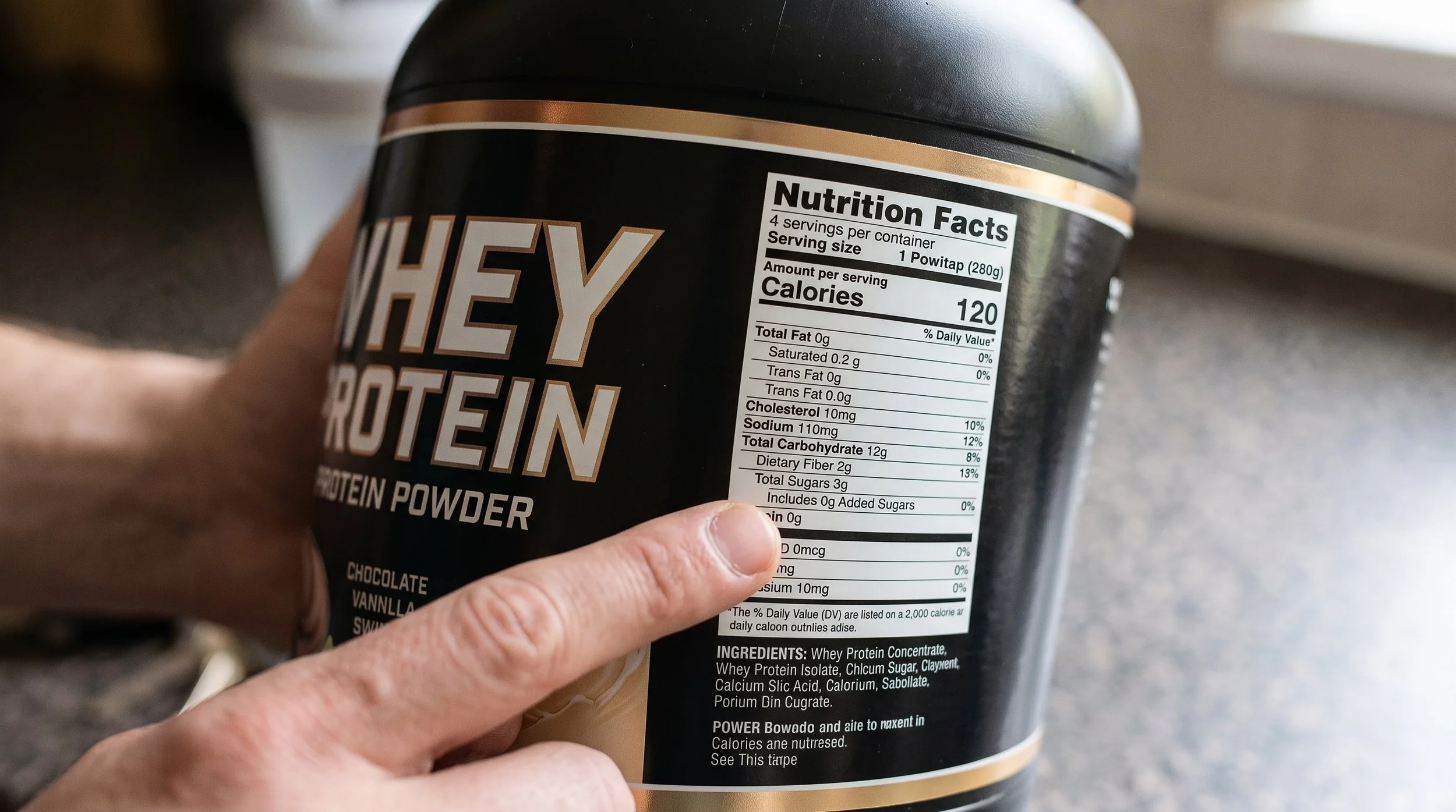
Is whey or plant protein better for acid reflux?
Short answer: There is no head-to-head trial comparing protein types for reflux symptoms. What matters more is the full formula and how you tolerate it.
Here is what we do know. Whey is a fast protein and casein is a slow one. Casein produced a long, slow rise in blood amino acids, which the researchers attributed to slower gastric emptying (Boirie et al., 1997, Proceedings of the National Academy of Sciences, PMID 9405716, DOI). Casein-heavy blends and "nighttime" proteins may sit longer, which is worth knowing if fullness is one of your symptoms.
Whey concentrate contains some lactose, and whey isolate contains very little. If dairy gives you bloating, isolate, egg white, or a plant protein is the better experiment. In the gastric emptying study above, whey and pea peptide drinks emptied at the same rate, so plant protein holds its own.
What if I'm on a GLP-1 Medication?
GLP-1 medications slow gastric emptying as part of how they work. In a population-based cohort study of 24,708 new GLP-1 users and 89,096 new users of a comparison diabetes medication, GLP-1 users had about a 27% higher risk of developing GERD over three years (Noh et al., 2025, Annals of Internal Medicine, PMID 40658955, DOI). The absolute difference was small, under 1 extra case per 100 patients.
We can use this information calmly. Your stomach is holding onto things longer, so caloric density and volume matter even more for you. Smaller shakes, thinner shakes, and half now with half in an hour all help. I cover the full picture in Managing GLP-1 Acid Reflux.
What should I look for in a protein powder for acid reflux?
A short ingredient list with a protein source you recognize.
No inulin, chicory root fiber, or FOS during your healing phase.
No sugar alcohols. Look for sorbitol, xylitol, maltitol, and erythritol.
Moderate calories per serving, and keep calorie-dense add-ins like nut butter modest.
A neutral, milky formula over an acidified clear one, especially for LPR.
Vanilla, unflavored, or spiced flavors over chocolate or mint if those are triggers for you.
20 to 30 grams of protein per serving. More per scoop mostly means more calories arriving at once.
Third-party testing, such as NSF Certified for Sport or Informed Sport.
How do I drink a protein shake without triggering reflux?
Keep the volume moderate. Mix with 8 to 10 ounces of liquid.
Sip it over 15 to 20 minutes. Your stomach handles a slow arrival far better than a fast one.
Give it its own slot. Have it as a snack or a light meal, and avoid stacking it on a full plate.
Stay upright, and keep it outside the 3-Hour Buffer before bed.
Finish with the LES Lock, one to five minutes of diaphragmatic breathing.
Run one experiment at a time. Change the powder, or the volume, or the timing, and log what happens. The Reflux Clarity Log in the FLORA App makes it easy to see which formulations settle well for you.
If you train hard, timing around sessions matters too. I cover that in Fueling for Hyrox Without the Burn. For everything else you drink in a day, see Best & Worst Drinks for Acid Reflux.
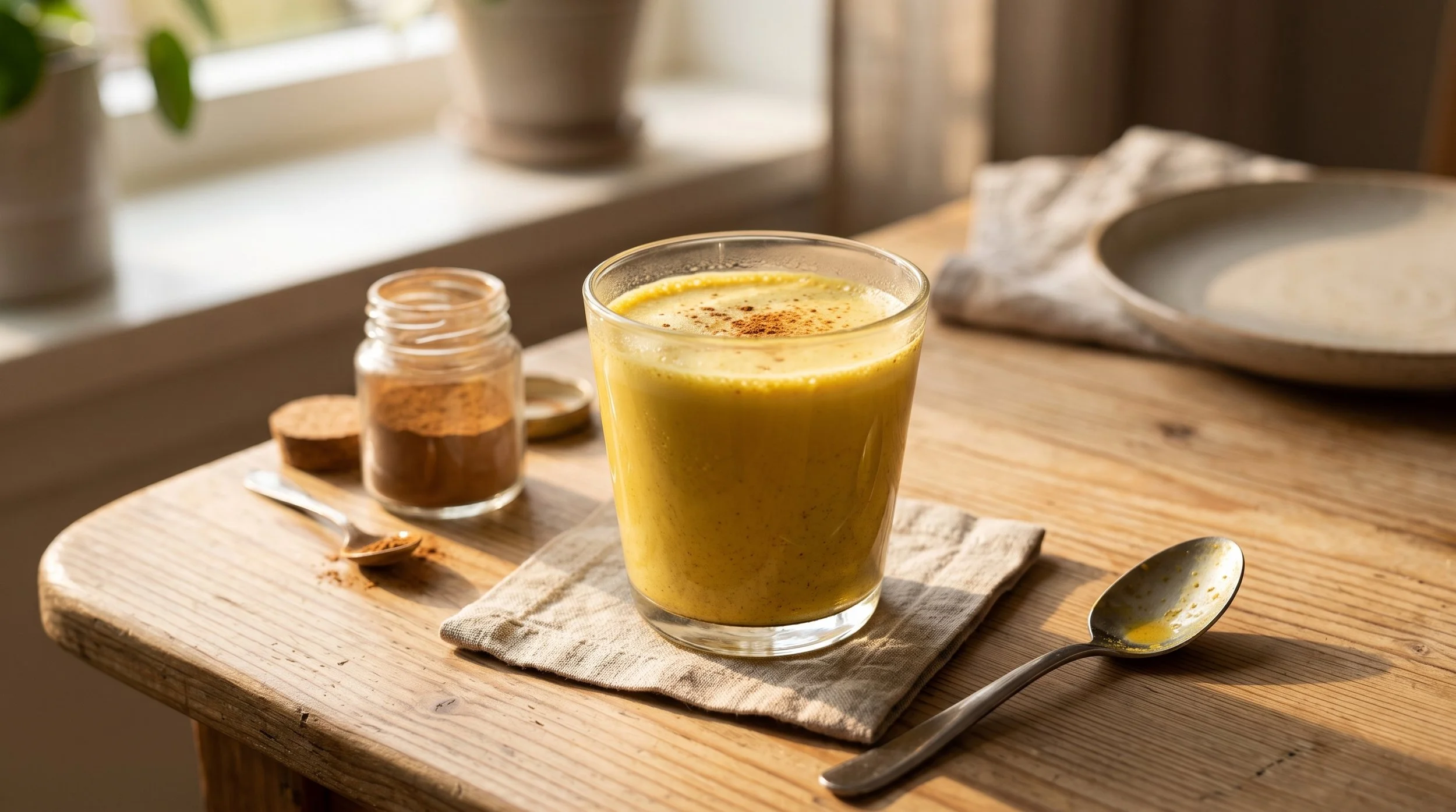
What I use
A disclosure first. I co-created the FLORA × Drink Wholesome Golden Milk Protein Powder in a paid partnership with Drink Wholesome, so I am not a neutral party here.
When I was healing my own reflux, most high-protein options were built around ingredients my stomach could not handle, which is a big part of why I co-created this one. It is made with real-food protein including egg whites, flavored with turmeric and ginger, and has no sugar alcohols and no artificial sweeteners.
It is one option. Any powder that passes the checklist above and sits well in your own experiments is a good powder for you. You can find the products we point clients to on our Recommended Products page.
Where to go from here
If shakes have been a problem, pick one variable this week. Most of our clients start with volume and speed, because that change is free.
Protein is a strategic addition to your healing architecture, and you do not have to give it up to keep your reflux calm. We adjust the delivery and keep the protein.
With love,
Some links on our Recommended Products page are affiliate links, which means FLORA may earn a commission at no extra cost to you.