High Protein Breakfast for Acid Reflux: 5 Easy GERD and LPR Recipes
Short answer: A reflux-friendly breakfast pairs a real protein source with fiber, a moderate amount of fat, and a portion big enough to carry you to lunch. Skipping breakfast tends to backfire with reflux: you get to the evening very hungry, eat past fullness, and lie down with a full stomach, which is when nighttime reflux is most likely.
If you have reflux and breakfast keeps falling off your list, you're in good company. Mornings are busy, your appetite may be low, and when every food feels like a gamble, skipping the meal can seem like the safest choice. I lived with GERD for over a decade, so I understand that. It's also one of the most common habits I see working against my clients' symptoms.
Below I walk through what a skipped breakfast sets off, why protein earns its place at this meal, and five high protein breakfasts from my own kitchen. Most are ready in about 10 minutes.
What skipping breakfast sets off
I call this the cascade effect. When you skip breakfast, you go most of the day without real fuel, and by the afternoon or evening you're very hungry. That kind of hunger makes it hard to stop at about 80% full, the Okinawan practice of hara hachi bu that I teach for mealtimes.
Once you eat past that point, your stomach is stretched. A stretched stomach is one of the main triggers for the lower esophageal sphincter (LES), the valve at the top of your stomach, to open when it shouldn't, so stomach contents can move up.
The effect reaches into your night. If that big meal is dinner and you lie down while your stomach is still full, gravity is no longer helping keep things down. Nighttime reflux often happens without you noticing, and it can travel all the way up to your throat. Pepsin, a digestive enzyme that travels up with reflux, can settle into throat tissue and keep irritating it, which shows up as throat clearing, a sore throat, coughing, and post-nasal drip.
The research lines up with what I see in practice. A systematic review of 72 studies found that people who regularly skipped breakfast had about 2.7 times the odds of GERD, and people who ate beyond fullness had nearly 3 times the odds (Zhang et al., 2021, see References). These are observational studies, so they show a link rather than proof of cause, but they point the same direction.
The first meal of the day is where we interrupt the cascade.
Why protein matters at breakfast with reflux
Protein does two jobs at breakfast. It helps keep your blood sugar steady, and it keeps you full, which prevents the extreme hunger that sets up the cascade. That's why I build every breakfast around a real protein source rather than toast or fruit alone.
Portion size matters too. With reflux, I recommend making breakfast one of your larger meals. Eating more earlier in the day means you arrive at dinner comfortably hungry instead of starving, a smaller dinner means less volume in your stomach at bedtime, and that takes pressure off your LES.
Fiber and carbohydrates belong at this meal as well. They give you steady energy, and the muscles of your digestive tract need fuel to keep food moving down. In one small study of people with non-erosive reflux who were eating less than 20 grams of fiber a day, adding psyllium fiber three times a day for 10 days lowered both heartburn and the number of reflux episodes (Morozov et al., 2018, see References). Each recipe below pairs protein with fiber.
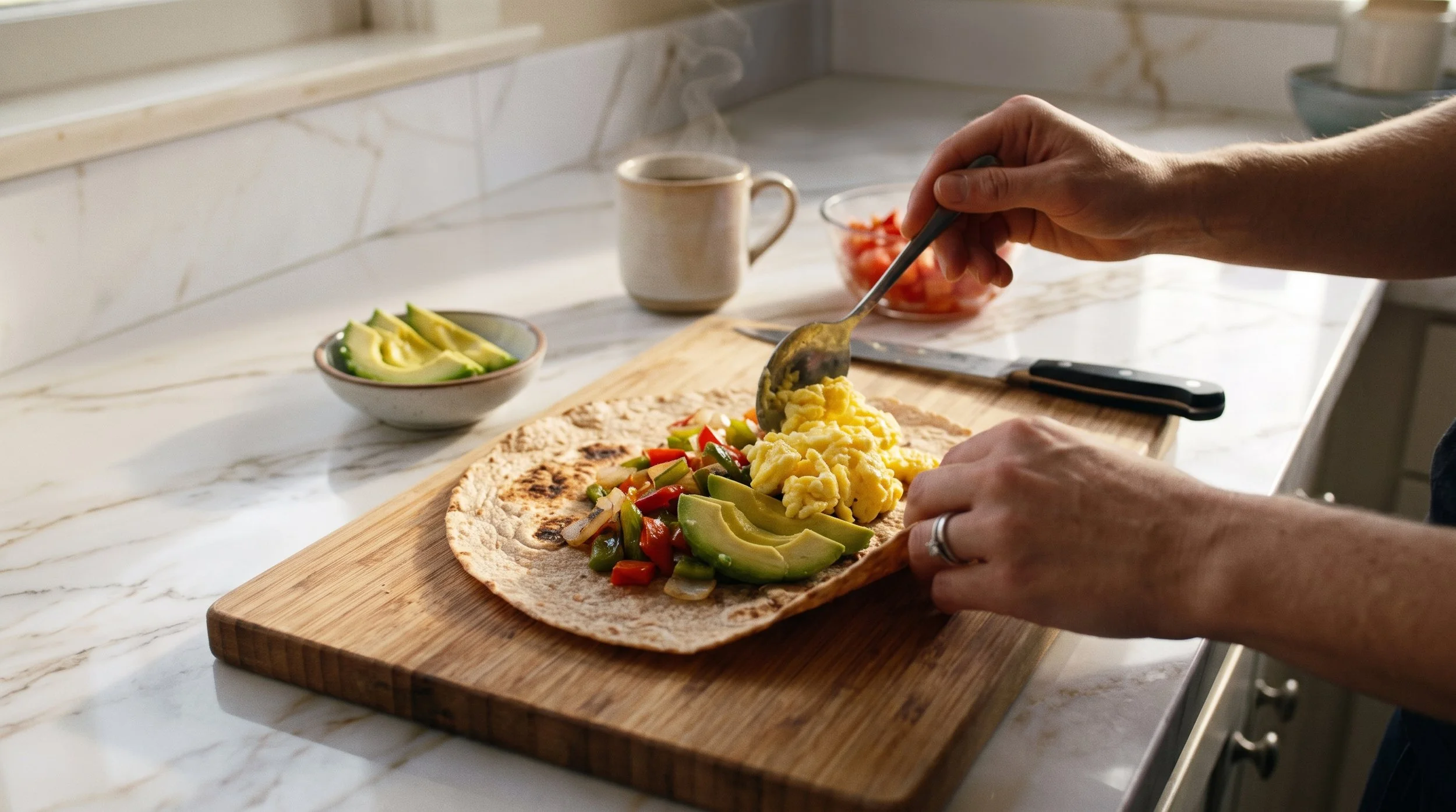
1. Egg white breakfast tacos (about 6 minutes)
This is the breakfast I eat most mornings in some variation.
Cook frozen veggies in a pan for about a minute, until they thaw and cook down.
Add about 200 grams of liquid egg whites (whole eggs work too), a little salt, and the seasonings you like. Thyme, sumac, za'atar, rosemary, and basil all work well.
Turn off the heat, then stir in a little turmeric for color. I add it off the heat so it isn't exposed to more cooking.
Warm two whole wheat tortillas. Warming them makes a real difference. If you're wheat free or following low FODMAP, use corn tortillas.
Fill with the eggs and veggies, then top with fat-free feta (protein without extra fat), fresh cilantro, rainbow slaw, and a little avocado.
The portion looks big to some people, and that's intentional. Breakfast is the meal where I want you eating more.
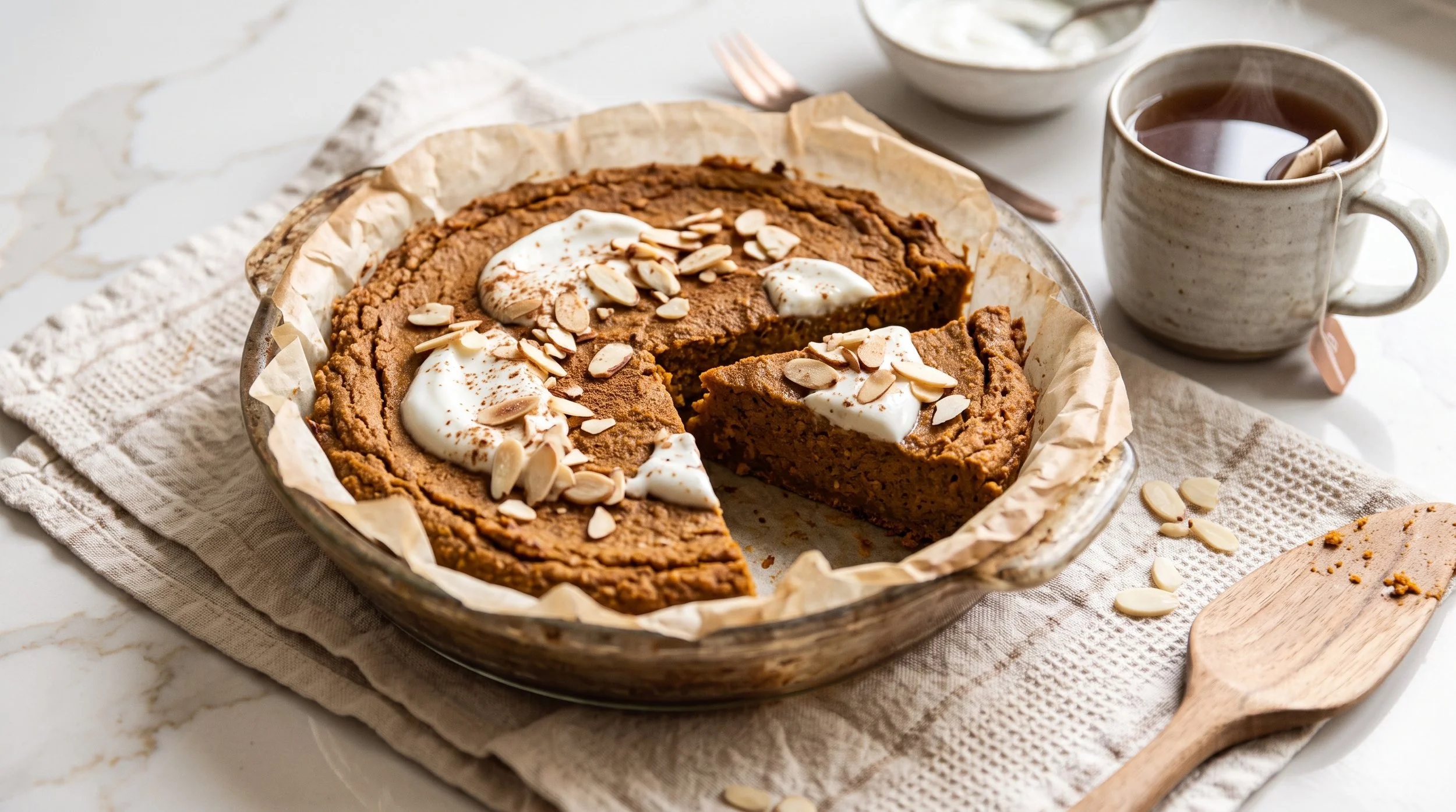
2. Pumpkin protein pie
This one is dessert for breakfast, and it comes together in one bowl.
Preheat your oven to 400°F (200°C) and line a baking dish with parchment.
In a large mixing bowl, whisk together the pumpkin puree, eggs, egg whites, vanilla extract, and almond milk until well combined.
Add the dry ingredients, two servings of Drink Wholesome Golden Milk protein powder (about six tablespoons), sweetener, spice, baking powder, and sea salt, and mix until the batter is completely smooth.
Pour into a greased glass pie pan or a pie pan lined with parchment paper (my preferred choice!).
Bake at 400°F (200°C) for 15 minutes, then reduce the oven temperature to 320°F (160°C) and bake for another 25 to 30 minutes, until the center is set and the top has slightly cracked.
Remove from the oven and let cool completely before slicing. Top with dairy-free whipped cream or yogurt if desired, and enjoy!
Pumpkin is a gentle, high fiber carbohydrate. If you're following low FODMAP, canned pumpkin tests low FODMAP at about ⅓ cup (75 grams), so cut the pie into at least six servings to stay in that range.
I created the Golden Milk protein powder with Drink Wholesome. Its protein comes from whole food sources (egg whites, almonds, and coconut), it's sweetened with maple sugar, and it has turmeric and ginger, with no sugar alcohols and no artificial sweeteners. Cinnamon comes up in my inbox a lot. It tastes a little warm, but it isn't a common reflux trigger.
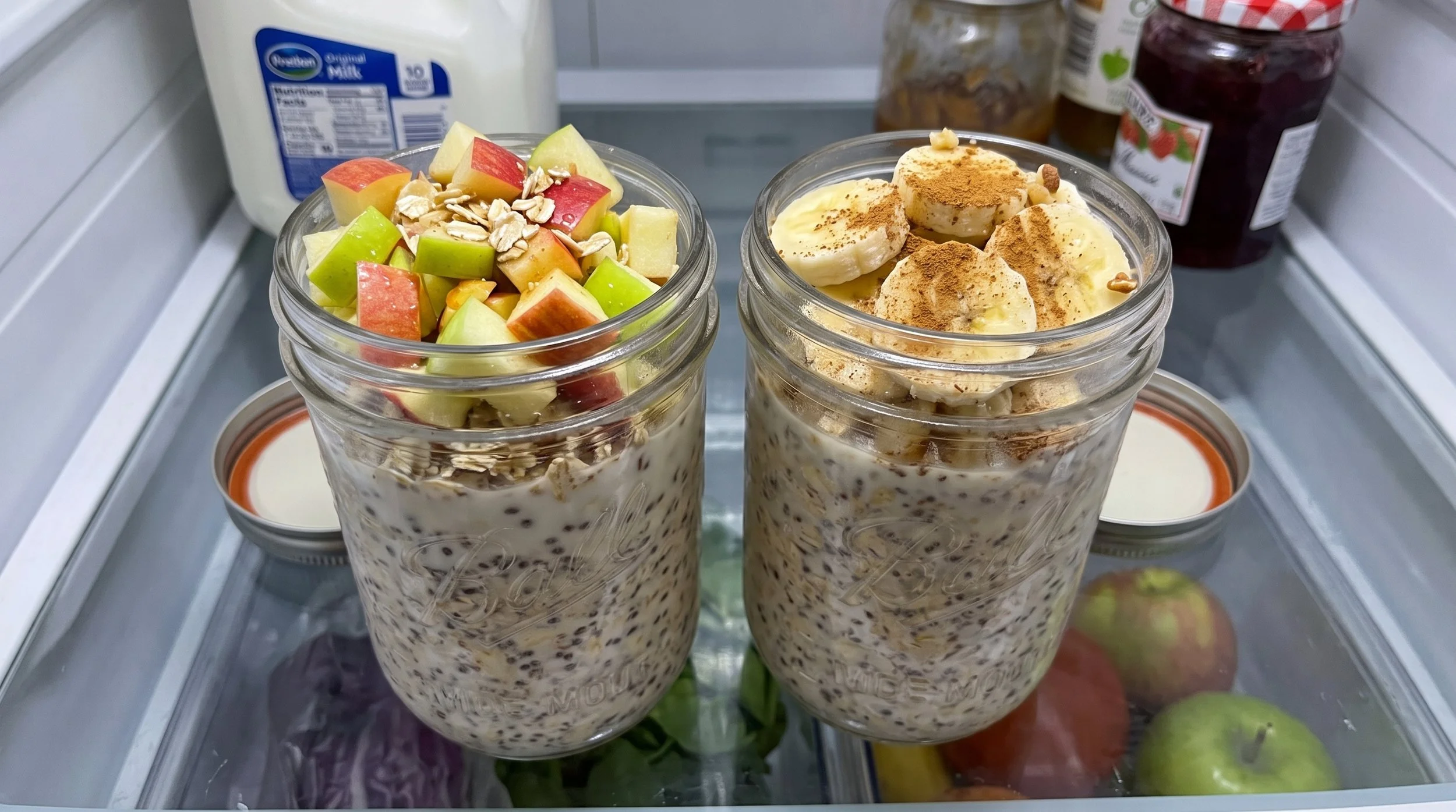
3 and 4. Two high protein overnight oats
For both versions I use about a third of a cup of oats to keep blood sugar steady, a little fruit, and flax meal for extra fiber and protein. Prep takes under three minutes, and the flax thickens quickly in the fridge.
Golden milk apple oats: oats, flax meal, Golden Milk protein powder, about 60 grams of diced apple, and your milk of choice.
Banana bread oats: oats, flax meal, vanilla Chobani yogurt with no added sugar, almond milk, sliced banana, and cinnamon. I find Chobani sits better than tangier yogurts, and mixing it with almond milk, banana, and oats keeps the jar gentle, since banana and oats are low-acid foods. You also get a fermented food and some calcium at breakfast.
5. Vegan tofu scramble on sourdough toast
For a plant-based option:
Put frozen veggies in a pan and crumble in extra firm tofu.
Add Italian seasoning and cook until the water evaporates.
Finish with garlic-infused olive oil for flavor (it's low FODMAP, unlike fresh garlic). Sumac is delicious here too.
Take it off the heat and stir in a little turmeric.
Spread avocado on sourdough toast and pile the scramble on top. A baked sweet potato works in place of toast.
Finish with fresh cilantro and sea salt.
I use only about a third of an avocado here, since a lot of fat in one meal keeps your stomach full longer, which can make reflux more likely. This batch makes about four servings.
Tofu made with calcium sulfate is also a good source of calcium. That matters if you've been on a PPI long term, because lowering stomach acid can reduce how well you absorb calcium and iron.
Make one of these your breakfast this week
Pick one recipe and make it the meal you stop skipping. Start with the egg white tacos if you want the fastest option, or the overnight oats if you want breakfast waiting for you. Give it two weeks and notice how your evenings and nights feel. Small hinges swing big doors.
If you want a plan built around your meals, your triggers, and your root contributors, our team of reflux dietitians builds it with you 1:1.
With love,
References
Zhang M, Hou ZK, Huang ZB, Chen XL, Liu FB. Dietary and lifestyle factors related to gastroesophageal reflux disease: a systematic review. Therapeutic and Clinical Risk Management, 2021. Systematic review of 72 observational studies; skipping breakfast OR 2.7 (95% CI 2.17 to 3.35), eating beyond fullness OR 2.85 (95% CI 2.18 to 3.73). PMID: 33883899. DOI
Morozov S, Isakov V, Konovalova M. Fiber-enriched diet helps to control symptoms and improves esophageal motility in patients with non-erosive gastroesophageal reflux disease. World Journal of Gastroenterology, 2018. Prospective single-arm trial, n=36 enrolled (30 analyzed), psyllium 5 g three times daily for 10 days. PMID: 29881238. DOI
This post is for educational purposes only and is not a substitute for personalized medical advice. Always consult your healthcare team before making changes to your routine.