LPR Supplements: What Actually Helps Silent Reflux
If you have LPR, there's a good chance you've spent real money on supplements that didn't do much. A bottle for the throat clearing. Something for the cough. A few things a forum swore by. And the hoarseness, the globus sensation, the constant need to clear your throat are all still there.
I see this pattern constantly. And it usually has nothing to do with how hard you're trying. Most of the time, the supplements were never matched to the mechanism driving your symptoms in the first place.
Why Most LPR Supplement Routines Miss
The most common mistake with LPR (laryngopharyngeal reflux, or silent reflux) is buying supplements before understanding what you're actually trying to support. More bottles rarely moves the needle. What moves the needle is matching the right mechanism to what your tissue actually needs.
Supplements for LPR tend to do one of a few jobs. They support the mucosal barrier (the lining of your throat and esophagus), they soothe irritated tissue, or they support motility and clearance. When you don't know which job your symptoms are asking for, you end up guessing. And guessing is what keeps people stuck for months.
The Pepsin Piece Most People Miss
Here's the part that changes how you think about all of it. In LPR, the problem may not be acid alone. A big part of the story is pepsin.
Pepsin is the enzyme that travels up with refluxate. Unlike a simple acid splash that washes through, pepsin can stay on and inside throat and esophageal tissue, where it keeps driving irritation well after the reflux event itself is over. Lab work backs this up. According to PubMed, a 2024 study in Cytokine (Tan et al., PMID 38471420) showed that pepsin triggers inflammatory injury in laryngeal cells through the ROS/NLRP3/IL-1β pathway, in a dose-dependent way. This is cell and tissue level evidence, not a clinical trial, but it helps explain something my clients feel all the time: why lowering stomach acid alone doesn't always calm the throat. The acid was only ever part of the picture.
Understanding pepsin reframes the whole question. Instead of asking "how do I block more acid?" we get to ask "how do I support and protect the tissue that pepsin is irritating?" That second question is the one that actually points you toward the right supplements.
How to Think About LPR Supplements
In the episode, I walk through the five supplements I most commonly reach for with clients. I'd rather you think of these as a set of mechanisms you can support strategically than as a shopping list to buy all at once.
1. Supporting the Mucosal Barrier
Your throat and esophageal lining have a barrier. When that barrier is under-supported, irritation lingers and small exposures feel bigger than they should. Certain supplements are used to support mucosal integrity and give the tissue what it needs to do its job.
2. Soothing the Tissue Directly
This is a different job from creating a physical barrier on top of your stomach contents. Alginates form a raft that sits on the surface of what's in your stomach, which is a useful and well-studied mechanism. According to PubMed, a 2020 systematic review in the Annals of Otology, Rhinology, and Laryngology (Huestis et al., PMID 32449369) found alginates can help with globus symptoms alongside acid suppression. But forming a raft is a separate job from soothing the throat and esophageal tissue itself. Knowing which one your symptoms call for is the whole game.
3. Supporting Motility and Clearance
The faster refluxate clears, the less time your tissue spends exposed to it. Supporting motility (the movement of food and contents through your digestive tract) is part of the bigger picture, not just a digestion add-on.
The remaining supplements I cover in the episode round out targeted tissue support, and I explain the full mechanism for each one on camera.
Build an Architecture, Not a Pile
The goal here is never to take all five at once. The goal is to identify the mechanism your symptoms are pointing to, support one thing at a time, and track whether it's working. That's how you stop guessing and start gathering real evidence about your own body.
If you feel overwhelmed, resist the urge to add another bottle and narrow down instead. Small hinges swing big doors, and a focused, well-matched approach almost always beats a cabinet full of supplements that were never matched to your root contributors.
You can learn more about reading your own symptom patterns in our guide to LPR vs. GERD, and you can explore the full healing approach inside the Reflux Relief Masterclass.
Where to Start
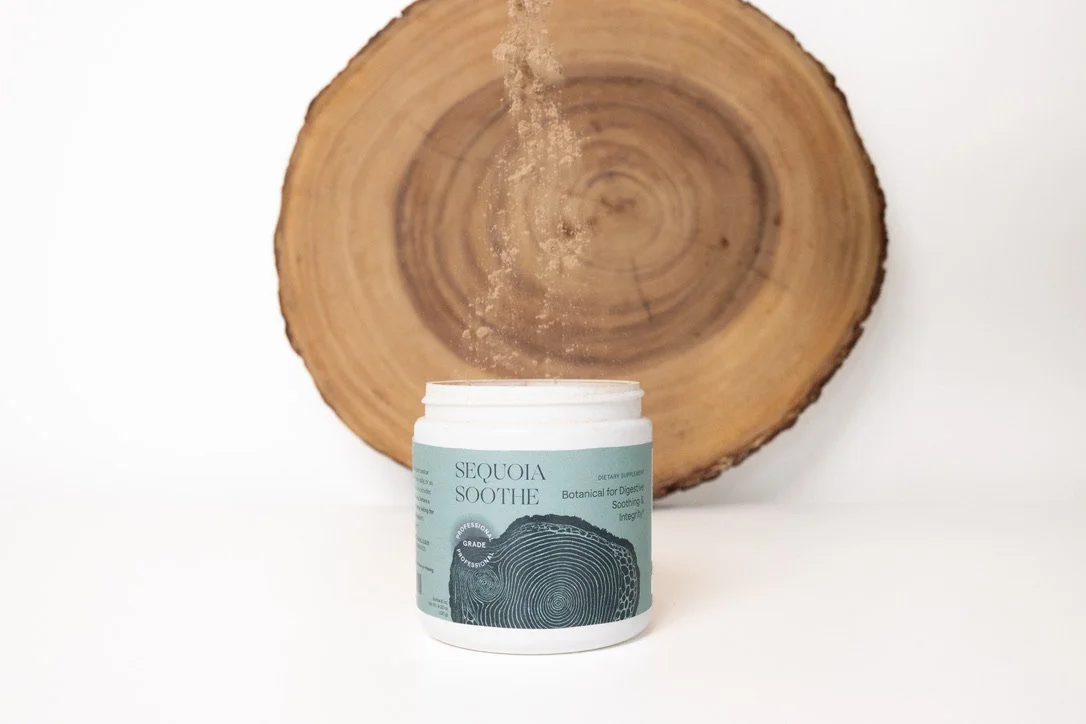
If your throat feels raw and irritated, supporting the tissue directly is often a good first move. I formulated Sequoia Soothe as targeted tissue support, with ingredients chosen to soothe the throat and esophagus, for the people I see struggling most with persistent LPR symptoms. It works by soothing irritated tissue and supporting esophageal comfort, which is a different job from the raft an alginate forms.
If you want to support your throat and esophageal tissue strategically, explore Sequoia Soothe and start matching your supplements to the right mechanism instead of guessing. This is the work we do together, and you don't have to figure it out alone.
With love,
Molly Pelletier, MS, RD