Top Supplements for Acid Reflux, GERD & LPR
If you're dealing with acid reflux, GERD, or LPR, you already know how much it can take over your life. The burning in your chest, the lump or rawness in your throat, the cough that won't quit, the nights you lie awake because lying down makes everything worse. It wears on your digestion, your sleep, and honestly your sense of feeling like yourself.
Medications like PPIs have their place, and they can be genuinely helpful in the short term. What they aren't built to do is address the root contributors of why reflux is happening in the first place (my blog on PPIs is worth a read if you're currently on one). That's why so many of the people I work with start looking for additional, supportive tools. Used well, the right supplements can calm symptoms while you do the deeper work on your barrier and your nervous system.
One thing before we get into the list: supplements are a strategic addition, never the whole plan. They work best layered on top of the foundational pieces, like how you eat, how you support your lower esophageal sphincter (LES), and how you regulate stress. With that said, here are the ones I reach for most with my clients.
The Formula I Reach For Most
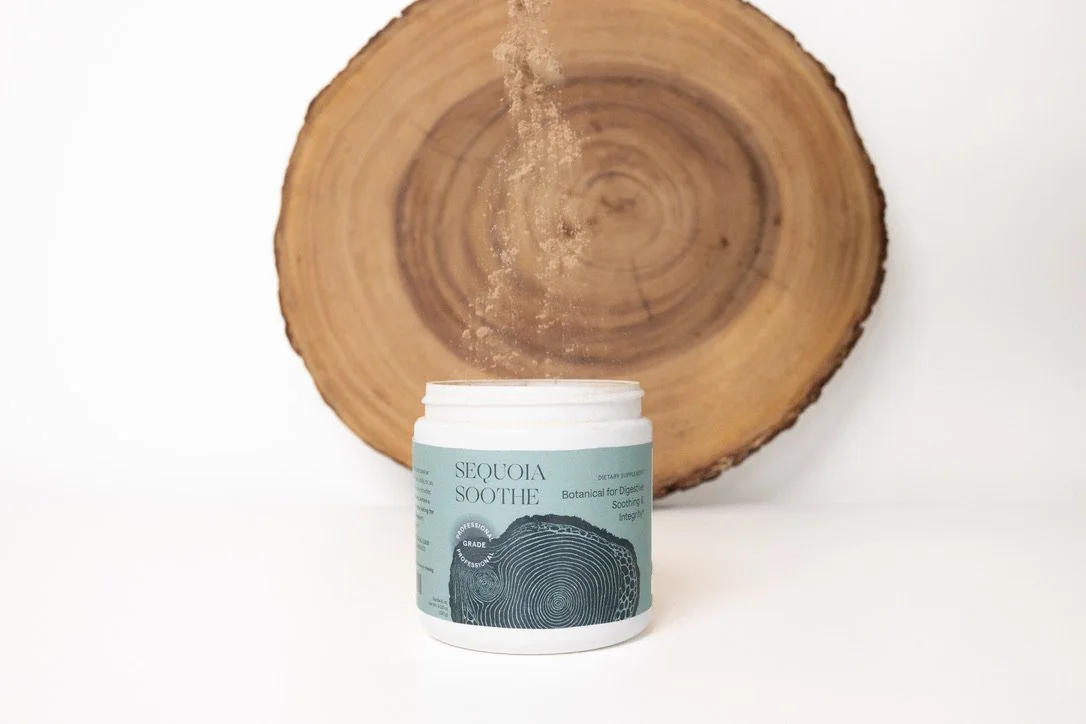
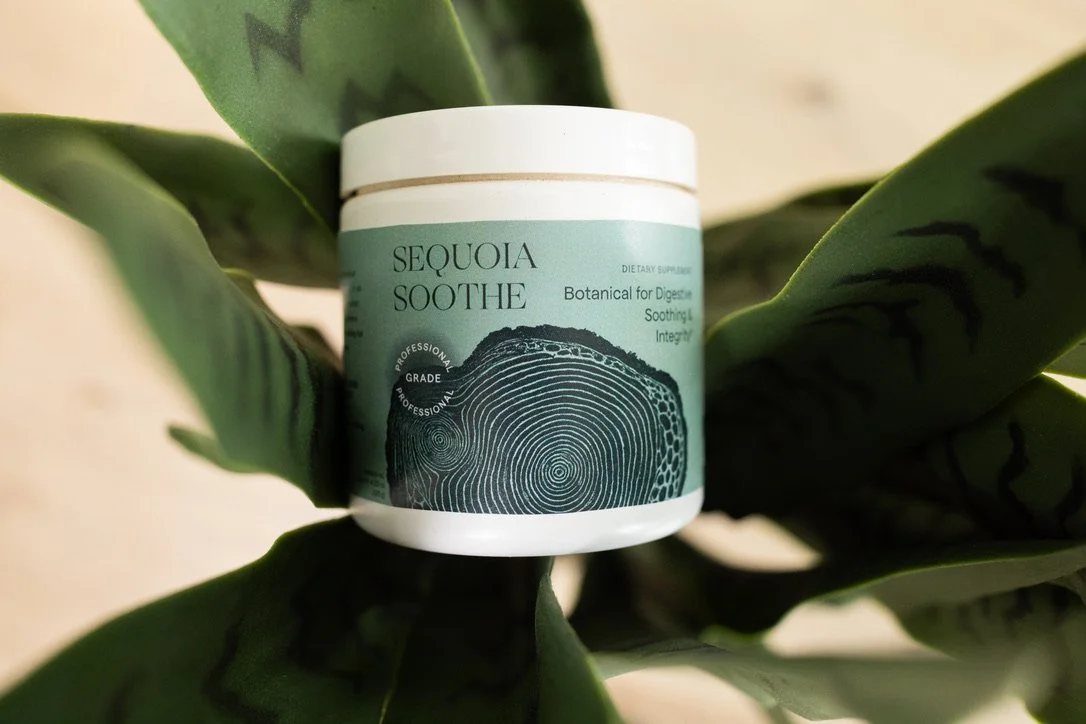
Several of the soothing, lining-supporting ingredients on this list are exactly why I formulated Sequoia Soothe, the professional-grade botanical powder I use with my own clients. One daily serving brings together slippery elm, L-glutamine, DGL (deglycyrrhizinated licorice), and zinc carnosine. The slippery elm offers an immediate coating, soothing feel for the throat and esophagus, while L-glutamine and zinc carnosine support the gut and esophageal lining over time. It's a strategic addition to the barrier and nervous-system work, not a replacement for it. Third-party tested, vegan, and free of gluten, nuts, and soy. Learn more about Sequoia Soothe here.
1. Slippery Elm
Slippery elm is a mucilaginous herb, meaning it turns thick and slippery when it meets water. That mucilage coats the lining of the esophagus and stomach, creating a soothing protective layer against acid and irritation. It may also prompt the stomach and intestines to produce more of their own protective mucus.
For a lot of people, the soothing feel is almost immediate, which makes it such a comforting option during a flare or a high symptom stretch. It can be taken as a powder stirred into water, or in capsules, lozenges, or tea. (Slippery elm is the immediate soothing ingredient in Sequoia Soothe).
Sequoia Soothe takes that soothing support a step further. It combines 1,000 mg of slippery elm with L glutamine, zinc L carnosine, and DGL licorice to support both immediate digestive comfort and the integrity of the digestive lining over time. This combination can be especially helpful when reflux or LPR has left the throat, esophagus, or upper digestive tract feeling irritated and sensitive.
The powder format is intentional. When mixed with water and slowly sipped, the formula comes into direct contact with the throat and esophagus before reaching the stomach. It's also unflavored, which can be especially helpful for people with reflux who find that strong flavors like mint or citrus trigger symptoms.
Slippery elm provides much of the immediate soothing support, and Sequoia Soothe pairs it with additional digestive supportive ingredients in one gentle formula. It can be used as daily soothing support during a healing phase, then scaled back to as needed once symptoms become more manageable.
2. Alginate Therapy
This is one of the most underrated tools for reflux, and I genuinely wish I'd found it ten years ago. Alginates are derived from seaweed. When you take one after a meal, it reacts with the acid in your stomach and forms a gel-like raft that floats on top of your stomach contents. That raft acts as a physical barrier, blocking gastric contents from refluxing up through your LES and into your esophagus.
It works through barrier mechanics rather than acid suppression. Your stomach acid is still there doing its jobs (breaking down food, defending against ingested pathogens), but the raft helps keep it where it belongs. For LPR especially, that matters, because it can reduce how much pepsin (the stomach enzyme that damages tissue in your throat and larynx even in low-acid conditions) travels upward.
The evidence here is strong. A 2017 systematic review and meta-analysis of 14 randomized controlled trials (2,095 people) found that alginate-based therapy resolved GERD symptoms significantly more often than placebo or antacids (odds ratio 4.42). Alginates are also generally considered safe for longer-term use, and they layer well alongside other approaches.
How I use it with clients: take it immediately after meals or before bed, whenever your reflux tends to spike. I usually have people start after their largest meal and before bed, then adjust from there.
FLORA recommendation: I recommend Reflux Raft to my clients. Alongside the alginate, Reflux Raft includes ginger and deglycyrrhizinated licorice, which add prokinetic, anti-inflammatory, and demulcent support (a demulcent forms a soothing protective layer over the mucous membranes). You can learn more or try Reflux Raft here.
3. Deglycyrrhizinated Licorice (DGL)
DGL is licorice with the compound glycyrrhizin removed. Glycyrrhizin is what drives licorice's less desirable effects, like raised blood pressure and lowered potassium, so taking it out leaves the parts that are kind to your gut. DGL supports your body's own mucus production in the esophagus and stomach, which helps protect that lining and supports a calmer, less irritated environment.
It's a longtime favorite for upper GI comfort, and it pairs naturally with the soothing herbs above. (DGL is one of the ingredients in my Sequoia Soothe formula.)
4. L-Glutamine
L-glutamine is an amino acid and the preferred fuel source for the cells that line your gut. When those cells are well-fed, they're better able to maintain the integrity of your intestinal barrier, which is part of the bigger picture of digestive resilience. I think of it as feeding the workforce that keeps your gut lining strong.
It's an especially nice fit for people focused on barrier support during their healing phase. (L-glutamine is one of the ingredients in my Sequoia Soothe formula.)
5. Zinc Carnosine
Zinc carnosine is a bound complex of zinc and L-carnosine, and what makes it useful is that it tends to adhere to irritated areas of the GI tract, almost like a bandage settling exactly where it's needed. It supports the integrity of the gastric and esophageal lining, which is why it shows up so often in protocols for people with throat and esophageal discomfort. (Zinc carnosine is one of the ingredients in my Sequoia Soothe formula.)
The Bigger Picture
Here's what I always tell my clients: supplements can be a meaningful part of your reflux-relief plan, but they aren't the plan. Lasting relief comes from a more complete approach that looks at your diet, your daily habits, how you support your LES, and how you regulate your nervous system, all tailored to you and your specific root contributors. The right supplement, used the right way for your body, is one supportive layer on top of that foundation.
If you're ready to figure out which tools actually belong in your protocol, with an evidence-based plan built around you, you can apply for a 1:1 consult with one of our expert Reflux Dietitians and we'll map it out together.

Written by Molly Pelletier, MS, RD, LDN. Molly is a Registered Dietitian specializing in acid reflux, GERD, LPR, and IBS, and a leading voice in nutrition for acid reflux. Her background in nutrition science and her own health history with GERD led her to found FLORA Nutrition, where she shares evidence-based tools and strategies to help others find relief from reflux and feel like themselves again. Follow Molly @mollypelletier.rd on all platforms | YouTube | Instagram | TikTok | Pinterest |
Blog co-created with FLORA Team Member & MS Nutrition/Public Health, Jacqueline Gilpin
References
- Leiman DA, Riff BP, Morgan S, et al. Alginate therapy is effective treatment for GERD symptoms: a systematic review and meta-analysis. Diseases of the Esophagus. 2017;30(5):1-9. PMID: 28375448. https://www.google.com/url?q=https://doi.org/10.1093/dote/dow020&source=gmail&ust=1781631460803000&sa=E
- Alginates for gastroesophageal reflux disease treatment. PharmaExcipients. https://www.google.com/url?q=https://www.pharmaexcipients.com/news/alginates-gastroesophageal-reflux-disease-treatment/&source=gmail&ust=1781631460803000&sa=E
- Reflux Raft. https://www.google.com/url?q=https://refluxraft.com/&source=gmail&ust=1781631460803000&sa=E
Frequently Asked Questions
What is the best supplement for acid reflux?
Alginate therapy, slippery elm, DGL, L-glutamine, and zinc carnosine are among the most evidence-supported options for soothing the esophageal and gastric lining. Supplements work best as a strategic layer on top of diet, meal timing, and nervous system support, not as a standalone fix.
Is alginate therapy safe for long-term use?
Alginates are derived from seaweed and are generally considered safe for longer-term use. Unlike acid-suppressing medications, they work through a physical barrier mechanism rather than altering stomach acid production, which means they do not interfere with normal digestive function. As with any supplement, check with your provider before starting, especially if you are managing other conditions or taking medications.
When should I take slippery elm for reflux?
Slippery elm is most useful taken around meals or during a high-symptom period, since its mucilaginous coating effect is fairly immediate. Many people find it especially helpful before or after their largest meal of the day, or before bed if nighttime symptoms are a pattern. Timing can be adjusted based on when your reflux tends to spike most.
What is DGL good for?
DGL supports the body's own mucus production in the esophagus and stomach, which helps maintain a protective lining and a calmer upper GI environment. It is a longtime favorite for upper GI comfort and pairs well with other soothing herbs like slippery elm.