10 Best Foods for Acid Reflux, Ranked by a Reflux Dietitian
If you have acid reflux, GERD, or LPR, you have probably been handed a long list of foods to cut. Coffee, gone. Tomatoes, gone. Citrus, chocolate, anything with flavor, gone. And still, the symptoms show up.
I know how defeating that feels, because I lived it for over a decade before I put my own GERD into remission. So I want to offer you something different from one more list of foods to fear. Restriction alone does not rebuild the mechanisms that are failing. It does not restore your LES tone, it does not support your motility, and it does not give your tissue the nutrients it needs to heal.
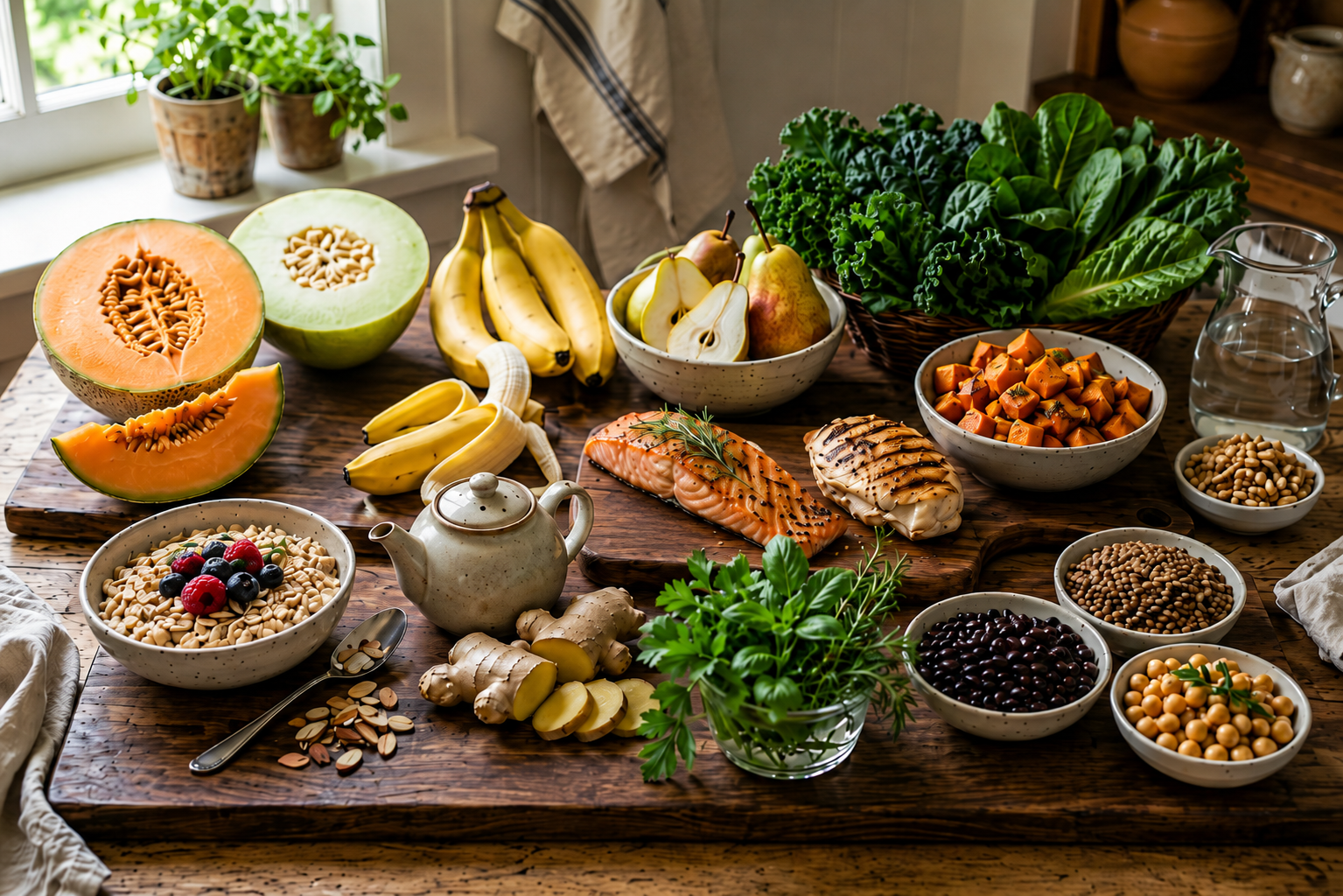
These are the 10 foods I actually recommend to my clients, and just as importantly, the reason each one earns its place. Watch the full grocery walkthrough below, then keep reading for the breakdown.
How Food Actually Helps Your reflux
Every food you eat is either supporting esophageal healing or working against it. The difference comes down to a few mechanisms working together: your acid load, your motility (how well food moves through your digestive tract), and the nutrients and fiber you give your microbiome and your tissue to heal. Blood sugar stability plays a role too.
When you choose food with those mechanisms in mind, eating in your healing phase stops feeling like restriction and starts feeling like a strategy. Here is what that looks like in the grocery cart.
The 10 Best Foods For Acid Reflux
1. Melons
Honeydew, cantaloupe, watermelon, and papaya are low in acid, alkaline-leaning, and a gentle source of fiber to support regular bowel movements. That regularity matters more than people realize, because it helps reduce the intra-abdominal pressure that pushes against your lower esophageal sphincter (LES), the muscle that is supposed to keep stomach contents where they belong.
2. Bananas
A ripe banana is rich in soluble fiber to support motility and regularity, and it is low enough in acidity that it will not activate pepsin in your throat. Pepsin is the enzyme that travels with refluxate and keeps damaging tissue even in low-acid environments, which is exactly why it matters so much in LPR.
3. Pears
Like bananas, pears bring soluble fiber and a low acid load. They are an easy, portable practice food when you are slowly rebuilding a fuller, less fearful plate.
4. Dark leafy greens
Spinach, kale, and other dark greens are antioxidant powerhouses that support your tissue during your healing phase, and they are naturally low in acid. They also add volume and nutrients without adding fat that can slow gastric emptying.
5. Sweet potato
This is my favorite complex carbohydrate for people with reflux. Sweet potato is rich in vitamin A, which supports the health and repair of the mucosal tissue that lines your digestive tract. It is satisfying without being heavy or high in the kind of fat that delays emptying.
6. Lean and omega-3-rich proteins
Chicken breast, turkey, and wild-caught salmon are easier on digestion than fattier cuts, because high-fat meals slow gastric emptying and can lower LES pressure. Salmon also brings anti-inflammatory omega-3s. A small tip from my own kitchen: buy them frozen so a quick, reflux-friendly dinner is always within reach.
7. Oats
Rolled or steel-cut oats are an anti-reflux staple. They contain beta-glucan, a soluble fiber that acts as a prebiotic to feed your microbiome, and it supports healthy cholesterol along the way. Oats are also gentle, warm, and filling, which makes them a sustainable breakfast in a healing phase.
8. Ginger
Ginger is one of my favorite ingredients because it is antioxidant-rich, anti-inflammatory, and supportive of digestion. Its standout benefit is motility. Fresh ginger in a stir-fry, grated into soup, or steeped as tea is an easy daily addition.
9. Fresh herbs
Sage, thyme, tarragon, and oregano prove that food does not need to be bland in a reflux healing phase. These herbs are antioxidant-rich and deliver real nutrients for your digestive health while letting you build flavor without reaching for high-acid or high-fat triggers.
10. Beans, lentils, and chickpeas
Legumes are a superfood for reflux: rich in soluble fiber that feeds your healthy gut bugs, affordable, and easy to keep on hand for weeknight meals. I love using chickpeas as the base for homemade dips, low-acid soups, and dressings.
The research behind the fiber connection
Fiber keeps showing up on this list for a reason. In a study published in the World Journal of Gastroenterology (Morozov et al., 2018, prospective study, n=30 patients with non-erosive GERD, PMID 29881238), adding soluble fiber for just 10 days raised minimal LES resting pressure from 5.41 to 11.3 mmHg, decreased the total number of reflux events from 67.9 to 42.4, and reduced how often patients experienced heartburn. In that study the fiber came from a psyllium supplement, but it tells us something powerful about soluble fiber as a category, the same kind found in your oats, pears, and legumes.
Ginger's reputation for motility holds up too. In a randomized, double-blind trial (Wu et al., 2008, European Journal of Gastroenterology and Hepatology, n=24 healthy volunteers, PMID 18403946), ginger cut gastric half-emptying time roughly in half, from 26.7 minutes to 13.1 minutes, and increased the stomach contractions that move food along. Faster, more coordinated emptying means less gastric content sitting around to reflux upward.
Food is one piece of the picture
Here is the part I never want you to miss. Food is typically one of five to seven root contributors to a reflux problem. Your LES tone, your motility, your mucosal integrity, your nervous system state, your sleep position, and your hormones all play a part. Food is one of the most powerful levers you have, and it works best inside a fuller strategy.
If you want to know which root contributors are driving your symptoms, take my free Reflux Relief Quiz. And if you want gentle support for irritated tissue while you do this work, our supplement Sequoia Soothe is formulated with slippery elm, L-glutamine, DGL, and zinc carnosine to soothe and support esophageal comfort.
When you are ready to go deeper into the full method, from barrier mechanics to nervous system regulation, that is exactly what we map out together inside the Reflux Relief Masterclass. Small hinges swing big doors. You deserve support that actually explains why your body is doing what it is doing, and what to do about it.
xo, Molly Pelletier, MS, RD