10 Foods That Actually Calm Acid Reflux (What My Clients Eat Every Week)
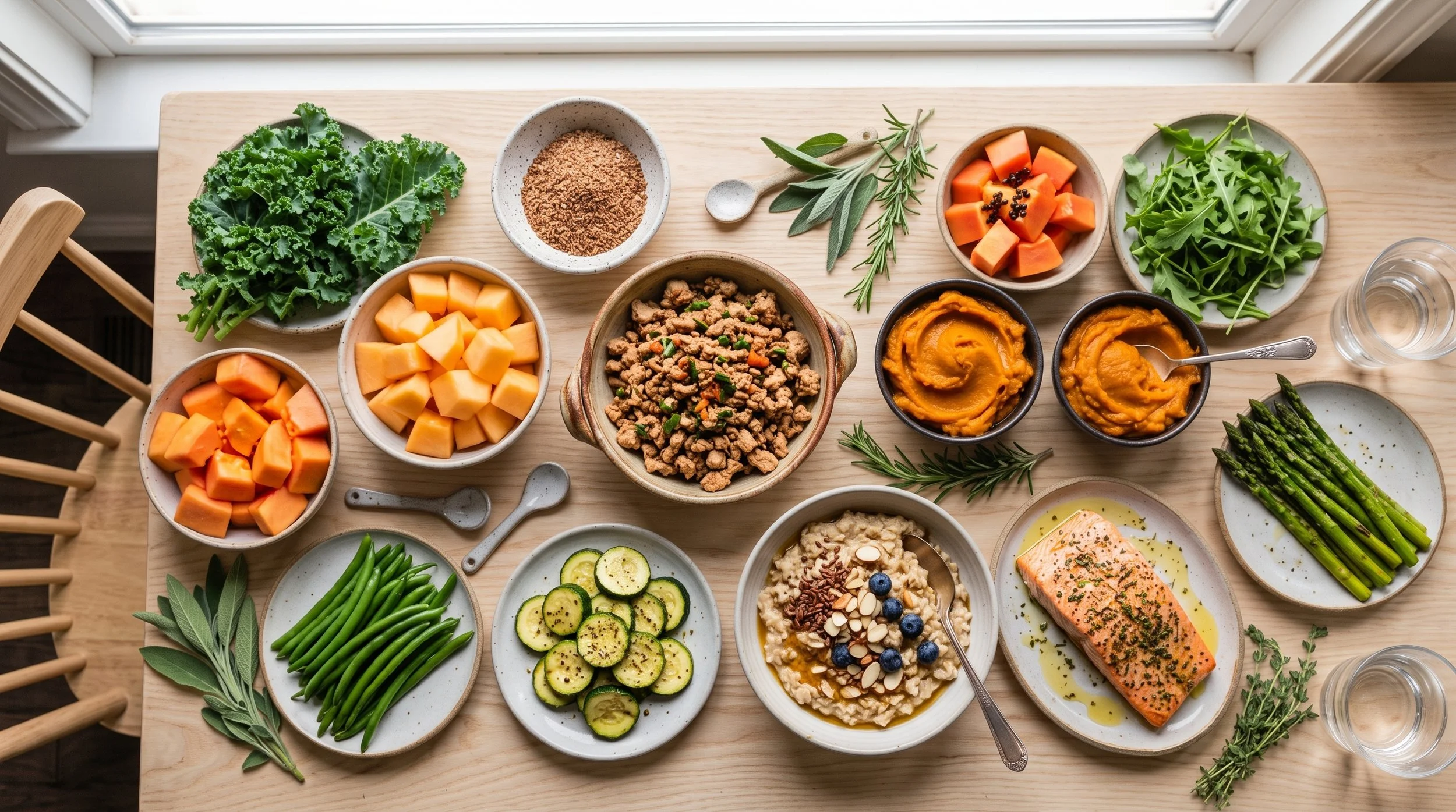
Short answer: Cutting foods does not rebuild the mechanisms that cause reflux. It does not restore LES tone, buffer pepsin, repair irritated tissue, improve motility, or calm your nervous system. The foods below do. These are the 10 foods my clients with acid reflux, GERD, and LPR eat on repeat during their healing phase, and the mechanism behind why each one earns its spot: flax meal, ground turkey, alkaline fruits, pumpkin, green beans, alkaline vegetables, bitter greens, wild salmon, reflux-friendly herbs and seasonings, and oatmeal.
If your safe food list keeps shrinking, this is for you
If you have acid reflux, GERD, or LPR, you have probably been handed a long list of foods to cut. Coffee, gone. Tomatoes, gone. Citrus, chocolate, anything with flavor, gone. And months later, so many people are still symptomatic with almost nothing left on their plate.
I lived this. When I was trying to heal my own GERD, every time a food gave me a symptom, I eliminated it. My list got smaller and smaller, and the fear around eating got bigger. That hypervigilance pushed my nervous system into a sympathetic, fight-or-flight state, which is the opposite of the rest-and-digest state your body needs to digest well and let tissue heal.
Here is what I have learned working with hundreds of reflux clients since: restriction alone does not heal. It does not restore your LES tone. It does not soothe irritated tissue. It does not improve the motility that keeps reflux in a loop. So in this live, we went the other direction, toward strategic addition.
Why Adding Foods Matters More Than Cutting Them
Food is typically not the root contributor to your symptoms. Reflux comes from failing systems: a weakened lower esophageal sphincter (LES), tissue that has been irritated by pepsin and acid, sluggish gastric emptying, and a dysregulated nervous system. Foods can either feed those systems or ignore them. Cutting a trigger might reduce a flare this week, but it will not rebuild the architecture underneath.
That is the shift we make together: from a shrinking list of "safe" foods to a growing list of foods that actively support healing. Food is one of the most powerful levers you have over every root contributor at once.
The 5 Mechanisms These Foods Feed
Every food on this list earns its spot by supporting at least one of these:
- LES support. The sphincter that keeps stomach contents where they belong.
- Pepsin buffering. Reducing activity of the enzyme that keeps irritating throat and esophageal tissue, especially in LPR.
- Mucosal repair. Giving your barrier the raw materials to rebuild.
- Motility. Helping your stomach empty efficiently so pressure does not back up under the LES.
- Nervous system regulation. Supporting the vagus nerve that coordinates the whole digestive sequence.

The 10 Foods My Clients Eat On Repeat
1. Flax Meal
Ground flax is one of the easiest ways to boost soluble fiber, and the ground form is easier to digest than the whole seed because the work of breaking it down is already done. Soluble fiber binds water in your stomach and creates a thicker, more viscous texture, and a viscous meal is harder to reflux than a thin liquid. This is a food we add gradually, a teaspoon at a time, so we support motility without overwhelming a sensitive gut.
2. Ground Turkey
This one sounds random until you think about digestion. Ground turkey is lean, so it does not delay gastric emptying the way fatty cuts do, and it is already broken down, which makes it gentler on an irritated stomach. That matters even more if you have gastritis. It is also convenient: turkey meatballs, turkey burgers, or crumbled over a carrot ginger soup.
3. Alkaline Fruits: Melon And Papaya
Honeydew, cantaloupe, watermelon, and especially papaya are low in acid and gentle on tissue that pepsin has already irritated. When your throat or esophagus is inflamed, low-acid fruit lets you keep fruit on the plate without re-activating pepsin.
4. Pumpkin
Canned pumpkin is affordable, versatile, and a low-acid complex carbohydrate that is rich in vitamin A, a nutrient that supports mucosal tissue repair. Use it as a base for pumpkin protein muffins or a quick puree under turkey meatballs.
5. Green Beans
Green beans are alkaline, low FODMAP, and easy to digest, which makes them a reliable vegetable for people managing reflux alongside IBS or bloating. They add fiber and volume to a meal without the fermentation that can push pressure up under the LES.
6. Alkaline Vegetables
Zucchini, asparagus, broccoli, kale, spinach, and arugula. Getting enough vegetables supports the antioxidant intake your tissue needs during a healing phase, and these are the ones that do it without a high acid load. Cook them well while your gut is sensitive.
7. Bitter Greens
Arugula, endive, dandelion greens, or dandelion tea. Bitter foods stimulate your body's own digestive enzyme production, which supports the breakdown of a meal and helps it move along. A handful of arugula on avocado toast or next to your eggs is an easy daily addition.
8. Wild salmon
Omega-3 fatty acids are essential, meaning your body cannot make them, and many of us are deficient (I tested deficient earlier this year). Omega-3s support the anti-inflammatory side of tissue repair. Wild salmon gives you the biggest dose per serving, and buying it frozen makes a reflux-friendly dinner affordable and always within reach. Sardines, mackerel, and anchovies work too.
9. Reflux-Friendly Herbs And Seasonings
Sage, rosemary, thyme, oregano, dill, parsley, cilantro, sumac. You do not have to eat bland food to heal reflux. In fact, I would not recommend it, because you will end up resenting your meals and consistency will fall apart. Fresh herbs add flavor and antioxidants without the acid or fat load of typical sauces.
10. Oatmeal
Oatmeal is naturally alkaline and contains beta-glucan, a soluble prebiotic fiber that feeds your microbiome. It is warm, filling, and one of the most sustainable breakfasts in a healing phase. One note: if oatmeal itself gives you symptoms, that usually points to something deeper going on, like motility or hypersensitivity, and it is worth looking at with a practitioner rather than cutting one more food.
Fiber: one of the most underrated additions
When gastric emptying is slow, food sits longer, pressure builds beneath your LES, and reflux becomes more likely. Fiber supports motility, and the research on this is stronger than most people realize. In a prospective study of 30 patients with non-erosive GERD, adding soluble fiber (psyllium) for 10 days increased minimal LES resting pressure from 5.41 to 11.3 mmHg, decreased the total number of reflux events from 67.9 to 42.4, and reduced weekly heartburn (Morozov et al., 2018, World Journal of Gastroenterology, prospective study, n=30, PMID 29881238, DOI)
That is a meaningful shift from a food-first change. Flax meal and oatmeal are both on this list for exactly that reason. We add fiber in gradually, because the goal is support, not overwhelming an already-sensitive gut.
The Pepsin Piece (Especially For Silent Reflux)
If you have LPR, acid is not your only concern. Pepsin, the enzyme that travels up with refluxate, can stay active on throat and esophageal tissue and keep causing irritation, even when the reflux is not acidic. This is why so many people with silent reflux stay symptomatic when they feel like they are doing everything right, and it is part of why PPIs fall short for LPR.
Low-acid foods like melon, papaya, pumpkin, and oatmeal keep you from re-activating pepsin that is already sitting on the tissue, which gives it a chance to calm down. Learn more in our silent reflux guide.
Food Alone Is Not The Whole Story
Here is the part most food lists leave out: you can eat perfectly and still reflux if your nervous system is dysregulated. Your vagus nerve coordinates gastric motility and LES timing. When you are stuck in fight-or-flight, that coordination breaks down. Eating in fear of food is itself a sympathetic state.
This is why we pair food strategy with nervous system work, including diaphragmatic breathing. In a randomized controlled trial of 19 patients with non-erosive GERD, four weeks of diaphragmatic breathing training reduced time with esophageal pH below 4 from 9.1% to 4.7% and improved quality of life, with benefits maintained at nine months in those who continued the practice (Eherer et al., 2012, American Journal of Gastroenterology, RCT, n=19, PMID 22146488, DOI). Read more on the vagus nerve and motility.
How To Start Without Feeling Overwhelmed
You do not need all 10 foods at once. Pick one mechanism that feels most relevant to your symptoms and start there. Motility if you feel full and heavy after meals: flax meal, oatmeal, bitter greens. Pepsin buffering if your throat is the main issue: melon, papaya, pumpkin. Tissue repair: salmon, pumpkin, alkaline vegetables.
Track how each addition affects your symptoms so you are building your plate on data, not fear. Small hinges swing big doors.
Where To Go From Here
If you want these foods turned into actual meals, the FLORA App has more than 300 reflux-friendly recipes (searchable by ingredient and separated by allergen), the Reflux Clarity Log to track what you eat alongside your symptoms and habits, and gut-directed meditations for the nervous system side of this work. Every recipe is built around the mechanisms above, so you are never guessing whether a meal supports healing. You can try it free for 7 days.
And if you want this built around your specific root contributors, that is the work I do with clients one-on-one. We look at your LES, your motility, your pepsin exposure, and your nervous system together, and we build a plan you can actually live with. Applications are currently open for US-based clients.
→ Start your free 7-day FLORA App trial
→ Apply for one-on-one support
You deserve support that actually explains why.
With love,
Molly Pelletier, MS, RD