Silent Reflux (LPR): Why Your Throat Won't Stop Clearing
You clear your throat constantly. There's a lump that won't go away. Maybe a chronic cough, a raspy voice, or the feeling that something is just... stuck. And when you finally get scoped, your doctor says everything looks fine.
If that's you, I want you to hear this first: you are not imagining it, and you are not overreacting. What you're describing has a name and a mechanism. It's called laryngopharyngeal reflux, or LPR. It's often called silent reflux because it can skip the classic heartburn entirely and show up in your throat instead.
What Is Silent Reflux (LPR)?
Short answer: silent reflux (LPR) is when refluxed stomach contents reach the throat and voice box and irritate that tissue, often without the heartburn we associate with GERD. That's why a "normal" esophageal scope can miss it.
Classic GERD tends to cause chest-centered symptoms. LPR travels higher. The material reaches the throat, where the lining is far more sensitive and far less protected than your esophagus. So the same event that barely registers in your chest can leave your throat inflamed for hours.
The Pepsin Mechanism: Why It Shows Up in Your Throat
Here's the piece most people never hear. The main irritant in LPR is often pepsin, a digestive enzyme that travels up with refluxate. Pepsin can settle onto the delicate tissue in your throat and reactivate even in a low-acid environment. That's a big part of why simply neutralizing acid doesn't always resolve silent reflux.
So the goal isn't only to lower acid. It's to reduce how often that material reaches your throat in the first place, and to support the tissue while it calms down. Once you understand that, the strategy changes.
How to Support LPR: The Playbook
1. A Low-Acid Dietary Strategy
This isn't about a forever list of foods you can never eat again. It's about reducing pepsin-reactivating exposure during a dedicated healing phase, then reintroducing strategically. We're building an architecture, not handing you another list of "bad foods."
2. The Psyllium Fiber Protocol
Fiber gets overlooked in reflux conversations, and it shouldn't. Psyllium supports gastric emptying and motility, and when things move in the right direction, there's less material sitting available to travel upward. In a 2025 randomized study of 505 people with LPR, adding psyllium husk to standard care produced the highest symptom-resolution rate at 82%, along with the fastest improvement, outperforming both a prokinetic add-on and standard care alone (Rana et al., 2025; Indian J Otolaryngol Head Neck Surg; PMID 40226240). We walk through dose and timing in the full episode.
3. The Vagus Nerve and Diaphragmatic Breathing
Your diaphragm and your lower esophageal sphincter (LES) work together as a barrier. When your body is stuck in a stress response, that coordination suffers. Diaphragmatic breathing supports your parasympathetic nervous system and helps that barrier do its job. In a small randomized controlled trial, a daily breathing practice cut the time the esophagus spent exposed to acid roughly in half and improved quality of life, and the people who kept it up were using less medication nine months later (Eherer et al., 2012; Am J Gastroenterol; PMID 22146488; n=19).
Here's what I teach my clients: the LES Lock. One to five minutes of diaphragmatic breathing with 360-degree ribcage expansion, done immediately after meals, up to five times a day. These bite-size practices are more achievable, and consistency is the secret sauce.
4. Throat-Soothing Support
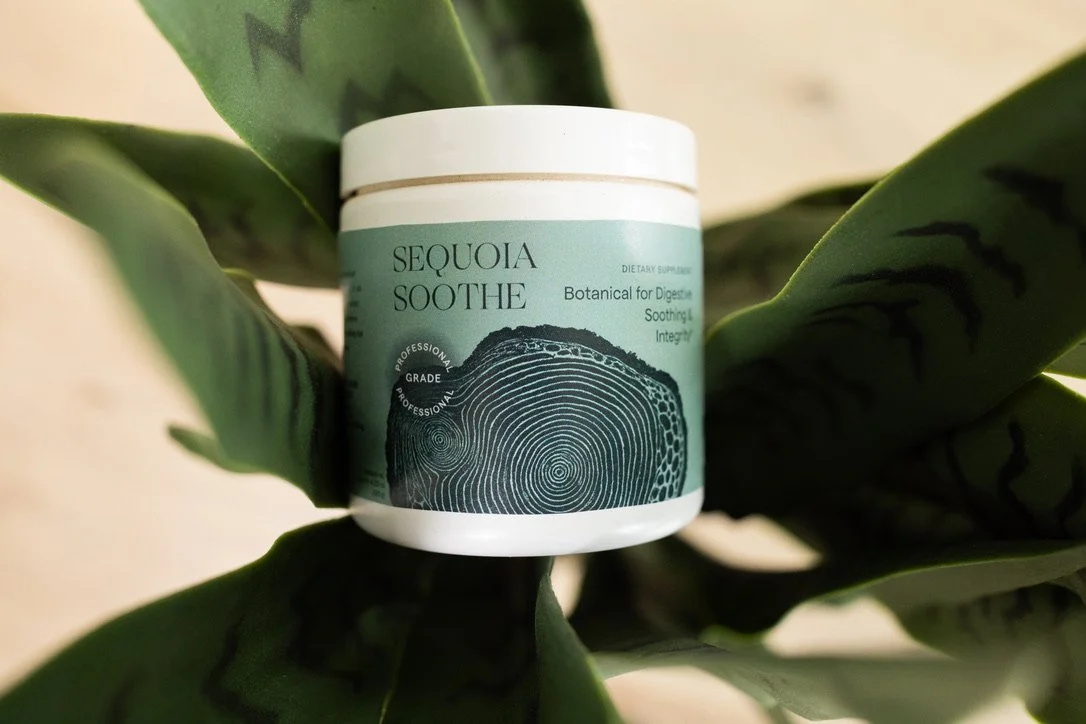
While we work on the root contributors, your throat still deserves relief now. A botanical blend designed to soothe irritated throat and esophageal tissue, with ingredients like slippery elm, DGL, and zinc carnosine, can be a supportive daily layer. Not a cure, just comfort while the deeper work happens. Learn more about Sequoia Soothe here.
Your Daily LPR Routine
The magic isn't in one heroic change. It's a few consistent, boring habits stacked together: a low-acid strategy, fiber support, daily breathing, a smaller dinner, a 3-hour buffer between your last meal and bed (beverages are still fine), and a little patience. Small hinges swing big doors.
If you've felt dismissed, unheard, or stuck, this is the work we do together, one supportive practice at a time.
Related reading on mollypelletier.com:
Diaphragmatic Breathing for Acid Reflux: How 10 Minutes a Day Can Strengthen Your LES
The Complete LPR & Silent Reflux Natural Treatment Guide: A Dietitian's Evidence-Based Approach
Ready to build your routine? The FLORA™ App helps you track your throat symptoms, spot your patterns, and practice your daily breathing, with a 7-day risk-free trial. Start here.
With love,
Molly Pelletier, MS, RD