Short answer: On a GLP-1 with acid reflux, eat smaller meals built around protein, choose gentle cooked foods, keep fat moderate, and finish your last meal well before bed. Sip fluids between meals instead of drinking a lot with them. The goal is less volume sitting in your stomach at any one time.
In this post
Why eating on a GLP-1 with reflux feels different
How much protein you actually need on a GLP-1
A reflux-friendly sample day
Meal timing and portions that make it easier
Foods and drinks that tend to make GLP-1 reflux worse
The takeaway
If you started Ozempic, Wegovy, Mounjaro or Zepbound and your reflux got louder, or your appetite dropped so low that you're not sure what to eat at all, this post is for you. Both problems are common, and they make each other harder: when nothing sounds good, it's easy to skip meals and then eat one large one later, which is exactly the kind of meal reflux tends to punish.
The principles are in my GLP-1 and reflux guide, linked below. Here I'm giving you the actual day: breakfast, a snack, lunch, dinner, and what to make on a day when solid food sounds like too much.
Why eating on a GLP-1 with reflux feels different
GLP-1 medications slow how quickly your stomach empties, so food stays there longer. A meal that felt fine before can leave you full for hours, and a fuller stomach puts more pressure on your lower esophageal sphincter (LES), the valve between your stomach and your esophagus. More pressure on that valve means more chances for stomach contents to move up. For how these medications work and why reflux shows up, read my full GLP-1 and reflux guide.
How much protein you actually need on a GLP-1
When you're eating less overall, protein is the nutrient I protect first, because it helps you hold on to muscle while you lose weight.
A 2025 joint advisory from four nutrition and obesity medicine organizations (the American College of Lifestyle Medicine, the American Society for Nutrition, the Obesity Medicine Association, and The Obesity Society) recommends making protein a priority during GLP-1 treatment. For active weight reduction, the advisory points to 1.2 to 1.6 grams of protein per kilogram of body weight per day, or a simpler absolute target of 80 to 120 grams per day (16 to 24% of energy on a 2,000-calorie diet).
The same advisory recommends eating protein foods first in a meal. With reflux, I like this for a practical reason. Fullness comes on faster on a GLP-1, and if you start with the bread or the rice, you may be full before the protein ever reaches your fork.
This is expert guidance, written by a panel that reviewed the research. It isn't a clinical trial, and these targets haven't been tested specifically in people with reflux. They are still the clearest starting point we have, and your dietitian or prescriber can adjust them for your body.
Hitting that range with a small appetite takes planning. Make-ahead protein (like the egg white bites below) helps, and so can a shake or a bar on busy days. If you're using those to close the gap, I've written about protein bars that tend to sit well with reflux and whether protein powder causes acid reflux.
A reflux-friendly sample day
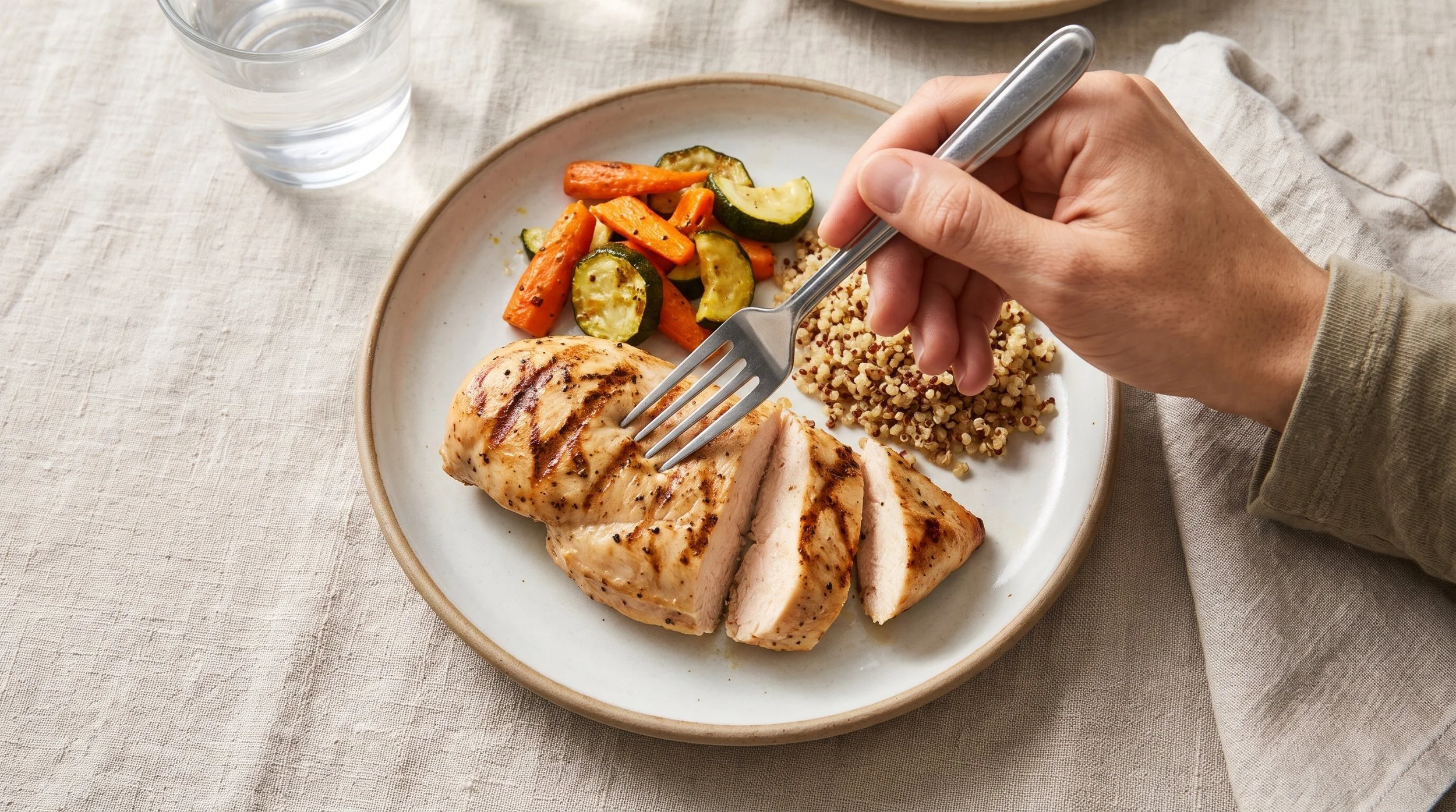
Every recipe here comes from the FLORA kitchen. The portions are meant to be small. Eat what feels comfortable, then stop.
Breakfast: Spinach & Feta Egg White Bites
Low-appetite mornings are where most GLP-1 eating plans fall apart, so breakfast should already be made. These bites are protein-dense, come in small portions you can eat one or two at a time, and keep for 5 days.
Ingredients
2 cups baby spinach
1/2 cup crumbled feta (or dairy-free alternative)
2 cups liquid egg whites (or 10 egg whites or 7 whole eggs)
1.5 cups cottage cheese (or 1 cup dairy-free alternative)
1/2 tsp sea salt
How to make them
Blend the egg whites, cottage cheese and salt for about 20 seconds.
Grease a muffin tin and tear the spinach into the cups.
Pour the egg mixture over the spinach and crumble the feta on top.
Bake at 375°F for 35 to 40 minutes.
For more morning options, see my acid reflux breakfast ideas.
Snack: Silky Smooth Edamame Hummus
This one gives you plant protein and gentle fiber in a snack you can eat by the spoonful. It uses garlic-infused olive oil, so you get garlic flavor without raw garlic, a common reflux trigger.
Ingredients
1 (12 oz) package shelled edamame
1 1/2 tsp baking soda
4 tbsp garlic-infused olive oil
1/2 tsp salt
2 tbsp nutritional yeast
Optional: 3 to 4 basil leaves
How to make it
Simmer the edamame with the baking soda for 10 to 12 minutes (8 to 9 if fresh), skimming off the foam as it cooks.
Drain.
Blend everything until smooth.
If you're in the first few days of treatment, the advisory suggests going easy on high-fiber foods, so keep this portion small at first.
Lunch: Salmon Rice Bowl
Lunch is a protein-first bowl. Start with the salmon, then move to the rice.
Dinner: Herbed Turkey Meatballs
Make dinner your smaller meal and eat it early enough that your stomach has time to empty before you lie down.
On a low-appetite or flare day: Miso Sweet Potato Soup
Some days, solid food sounds like too much. A soup is often easier to eat in small amounts, slowly, and it still counts as a meal.
Meal timing and portions that make it easier
These are the habits I start with for GLP-1 reflux:
Smaller, more frequent meals. The 2025 advisory recommends smaller, more frequent meals, along with going easy on fatty or high-fiber foods during the first few days, to help with GI side effects. It also notes that vomiting is more likely with large meals.
Protein first. Start each meal with the protein on your plate.
Stop at comfortable fullness. On a GLP-1, fullness can arrive faster than you're used to. Stop when you're comfortable, before you feel full.
Last meal well before bed. Lying down with a full stomach takes away gravity's help in keeping stomach contents down.
Sip fluids between meals. Large amounts of liquid with a meal add volume to a stomach that's already emptying slowly.
To be clear about the evidence: no study has tested meal size or meal fat on reflux in people taking GLP-1s. These recommendations come from expert guidance and from what I use with clients in my practice.
The tool I teach my clients for catching fullness is Mealtime Mindfulness: put your fork down between bites, and chew each bite to applesauce consistency. Slowing down gives your brain time to register that you've had enough, which matters more on a GLP-1 because those fullness cues come on faster. Food that's chewed well also leaves less work for a stomach that's already moving slowly.
Foods and drinks that tend to make GLP-1 reflux worse
Keep this list short and specific:
Large meals: more volume in a stomach that's emptying slowly.
Fried and very fatty foods: fat keeps food in your stomach even longer.
Alcohol: the 2025 advisory notes that alcohol may worsen nausea and gastroesophageal reflux with GLP-1 therapy.
Big fluid volumes with meals: save most of your drinking for between meals.
For the foods that tend to sit well, see my full list of foods that calm acid reflux.
The takeaway
Eating on a GLP-1 with reflux comes down to volume and order. Keep meals small, eat your protein first, slow down with Mealtime Mindfulness, and finish dinner well before bed. Start this week with the egg white bites, since they're ready on the mornings your appetite isn't.
Every recipe in this sample day lives in the FLORA App, along with 300+ reflux-friendly recipes you can search by ingredient. Start your 7-day risk-free trial at https://www.mollypelletier.com/flora. If you want a plan built around your medication, your symptoms and your appetite, apply to work 1:1 with our team of reflux dietitians at https://www.mollypelletier.com/acid-reflux-specialist.
With love,
Molly Pelletier, MS, RD
Verified Citations
Mozaffarian D, Agarwal M, Aggarwal M, et al. Nutritional priorities to support GLP-1 therapy for obesity: A joint Advisory from the American College of Lifestyle Medicine, the American Society for Nutrition, the Obesity Medicine Association, and The Obesity Society. Obesity (Silver Spring). 2025;33(8):1475-1503. Joint expert advisory (not a clinical trial). PMID 40445127. https://doi.org/10.1002/oby.24336